The artists
PostboxGhana
In 2021, Manuela Nebuloni created the Postbox Ghana collective as an archive documenting the history of architecture in West Africa, through a collection of postcards and stamps from the 1950s to the 1980s illustrating buildings and urban landscapes in Ghana. She was joined by Courage Dzidula Kpodo and the artist Nana Ofosu Adjei. Recognizing the lack of accessible visual references to the architectural history of the African continent, accessible on social nmedia or in archival databases, Postbox Ghana aims to preserve and transmit this history through these images. These archives contribute to building a visual repertoire of modern Ghana.
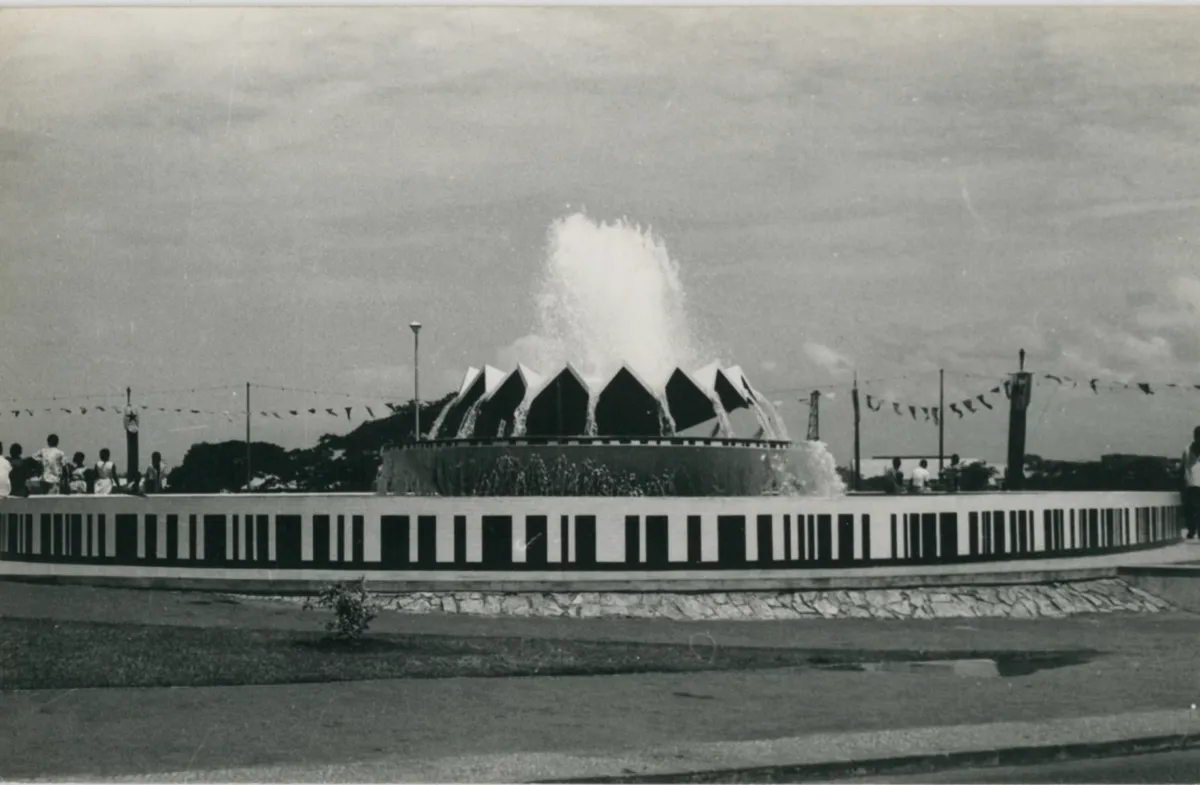
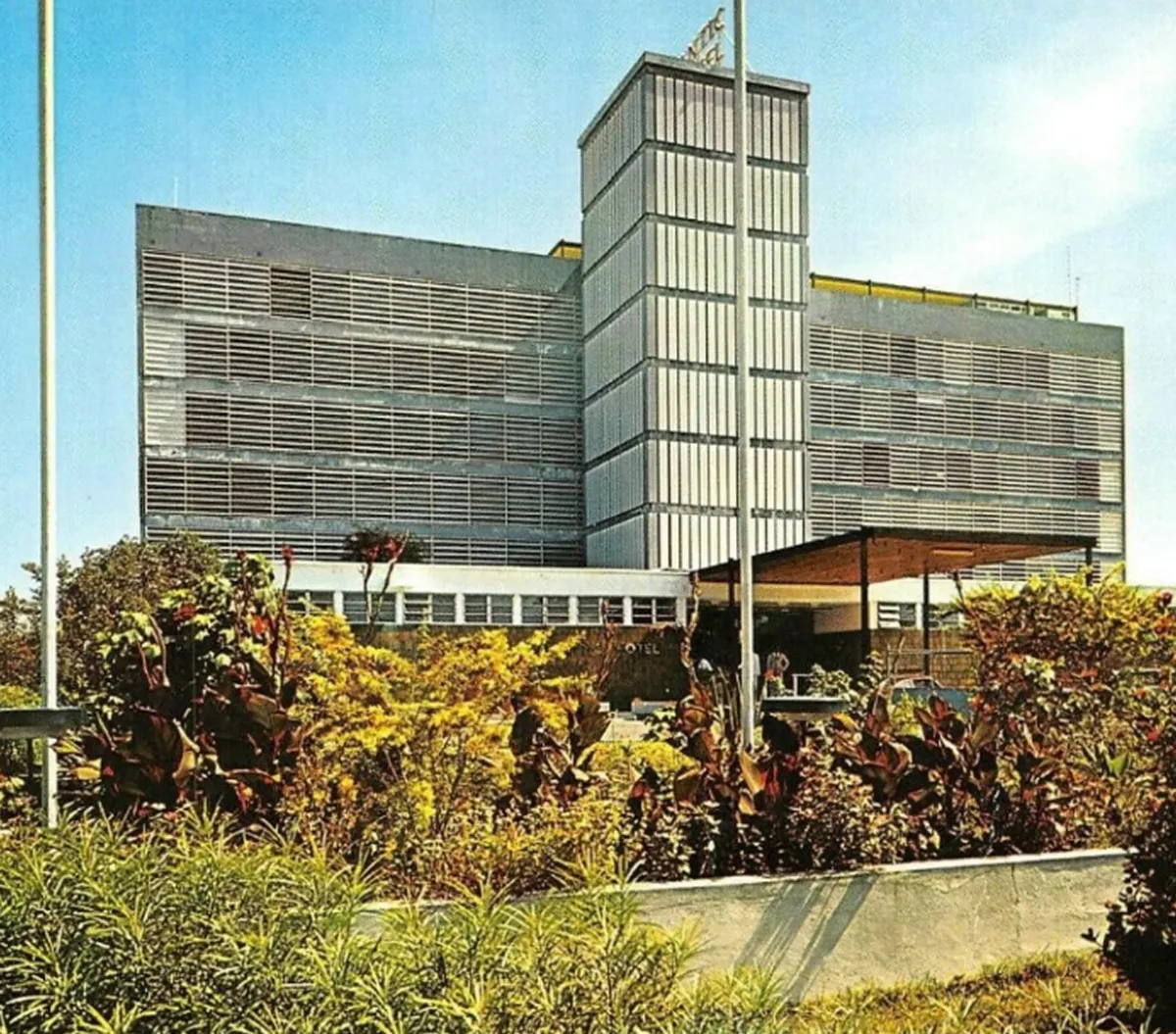
The installation Stills from a moving past brings together one hundred postcards depicting remarkable modernist buildings and bearing witness to their transformations. Some have shaped the image of post-independence Ghana, notably through the circulation of these postcards.
Produced in 2023 with Courage D. Kpodo, the film The Beautyful Ones Always Were extends this reflection by juxtaposing a selection of postcards with buildings from the era of independence and modernist experimentation. In a sequence filmed at Nkrumah Voli-ni in Tamale, a former grain silo built shortly before the fall of Nkrumah and acquired in 2021 by Ibrahim Mahama to be converted into an art center, Courage D. Kpodo and Postbox Ghana film the deterioration of the postcards in the humidity and darkness of the site, temporarily transformed into a darkroom.
Their contributions to the Great Harvest
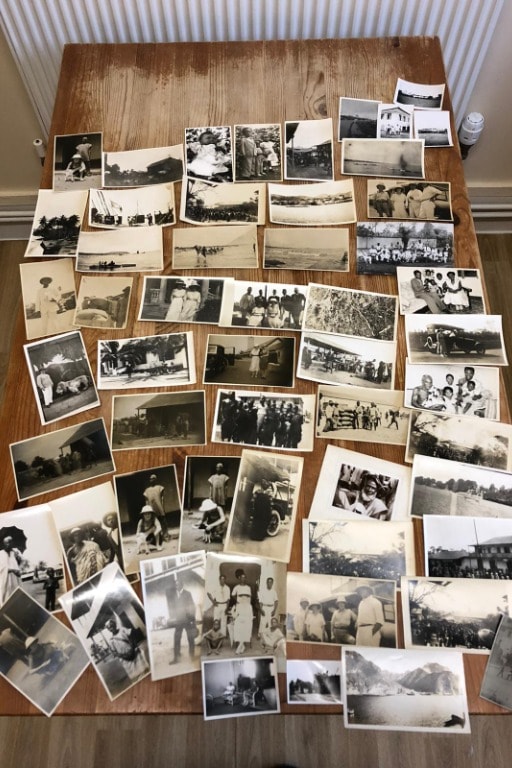
Research Postcards contain a wealth of visual and semantic information that were propagated through Ghana’s postal ecosystem across the passage to Independence: over 70 years ago, these resilient photographs touched a multitude of countries with handwritten chronicles on their back. Postbox Ghana unpacks the narratives embedded in archival photographs, stamps and ephemera from Ghana: it is a collection of visual references and an exploration of collective memory through the aesthetic possibilities of material culture, in the form of a learning exercise. As a joint piece of research on the wide topic of narratives, representation and architecture, Postbox Ghana is multi-directional, incomplete, and embracing change, as we discover new old forms of holding memory.
Archives & mémoire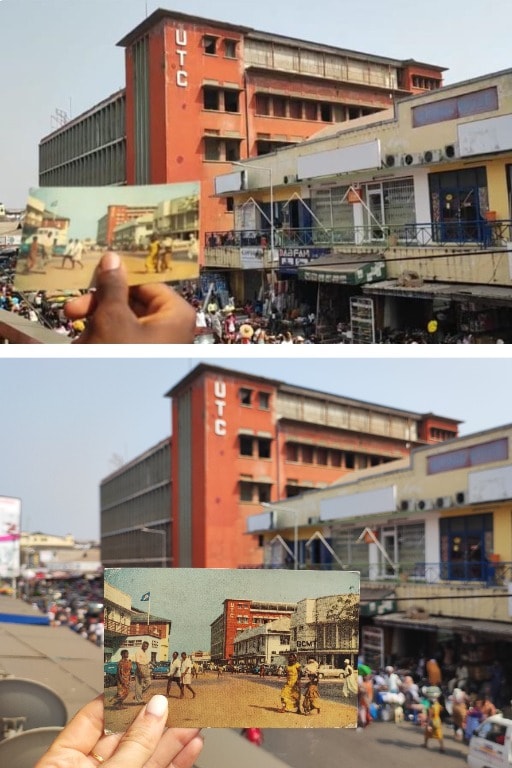
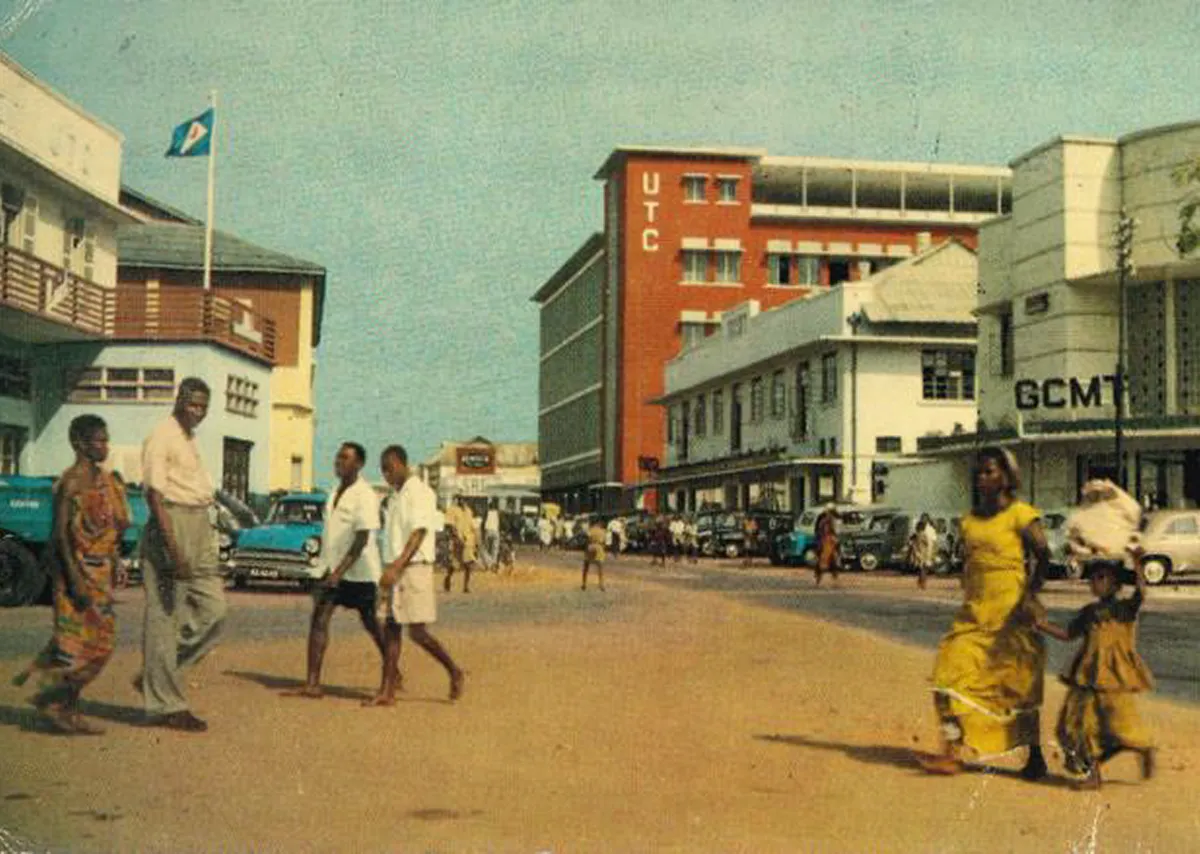
Pictures-in-places Postcards from the 1950s–70s offer fragments of a society in transformation: state-building, indigenous knowledge, the pursuit of modernity, national pride and emerging class divisions. Postal images celebrate the external monumentality of a changing nation, urban views reveal how Ghanaian cities mutated in the years after independence. This postcard was produced by the ‘Ghana Information Services’ in the immediate post-independence, printed in the UK. It shows busy passerby in front of the UTC and GTMT buildings in Accra, two examples of modernist architecture. Under Nkrumah’s vision, architecture was a primary tool of nation-building, a sure resource to diffuse a sense of pride for modernity and to unify a multitude of peoples under an impartial architectural language. Order, vibrancy, and industriousness emerge from the citizens making use of the built environment. The warm, earthy tones of the print speak simultaneously of the aging paper they lay on and the transformation of photography and its chemicals. Postbox Ghana is, first and foremost, a learning exercise: we collect vintage postcards and stamps to observe what old images teach us about the past and how they can inform the future. By juxtaposing and revisiting these images, we trace the changing conditions of the cities and monuments they once portrayed.
Utopies collectives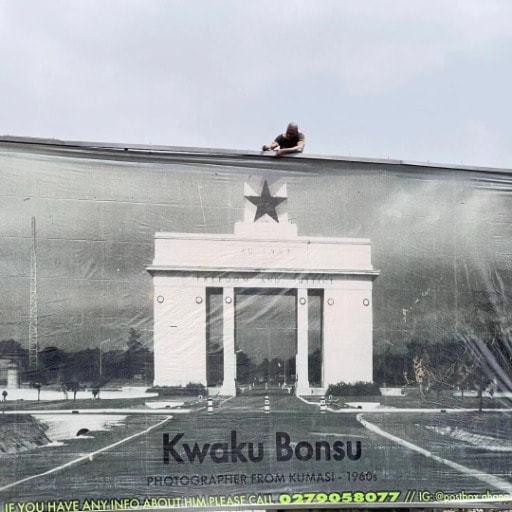
Looking for Kwaku Bonsu - Aboabo Customs / Anloga Junction, KUMASI - 2024 Within the practice of making an active use of archives, we built a 10-metre-wide advertising billboard to search for an unknown photographer: Kwaku Bonsu, active in Kumasi and Accra in the 1960s. Among the image-makers who documented Ghana’s transition to independence, his rigorously composed photographs captured Ashanti chieftaincy, urban life and the country’s new architecture. Placed along a busy urban road in Kumasi, the billboard brought a two-dimensional image into a four-dimensional space of movement, traffic and passing time. The layering of a large-scale archival image within a busy urban road creates a short circuit merging times and spaces, where the curious passerby might be intrigued by vintage scenes and faces, but most of people are too busy to observe their forebears from the 1960s.
Utopies collectives