The themes
Images & symbols
The Harvest Season explores collective memories through a plurality of media and archives, questioning how images and archives shape our understanding of the past and present. The exhibition highlights photographs, films, postcards, and symbols to explore identities, legacies, and artistic dynamics. Beyond their documentary function, these media serve here as tools for reappropriation, transformation, and creation.
Artists thus draw on these fragments of history to construct new narratives, often in dialogue with ancestral symbols such as Akan or Adinkra signs. These elements, imbued with meaning and spirituality, become bridges between eras and cultures, offering keys to understanding identity.
The exhibition invites reflection on the circulation of images and objects, and their capacity to bear witness to independence movements, migrations, colonial dispossession, and contemporary aspirations. It emphasizes the importance of preserving and activating these archives to keep history alive and pass it on, particularly that of the African continent. Through a diversity of artistic approaches, it demonstrates that the image is never neutral: it is a mirror, a tool of memory, but also a powerful lever for reinvention and for intergenerational and collective dialogue.
Images & symbols
© Cyril Marcilhacy 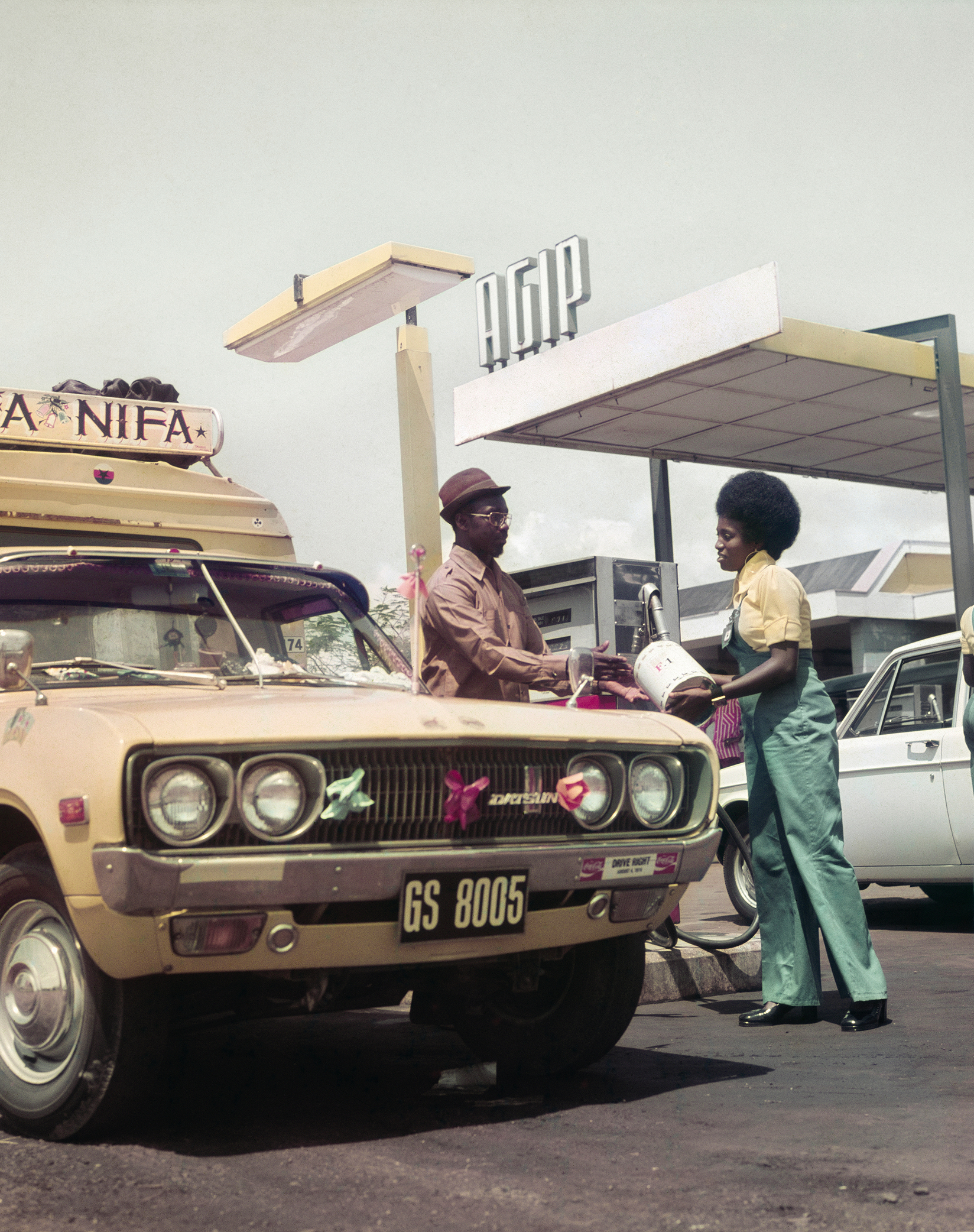
© James Barnor 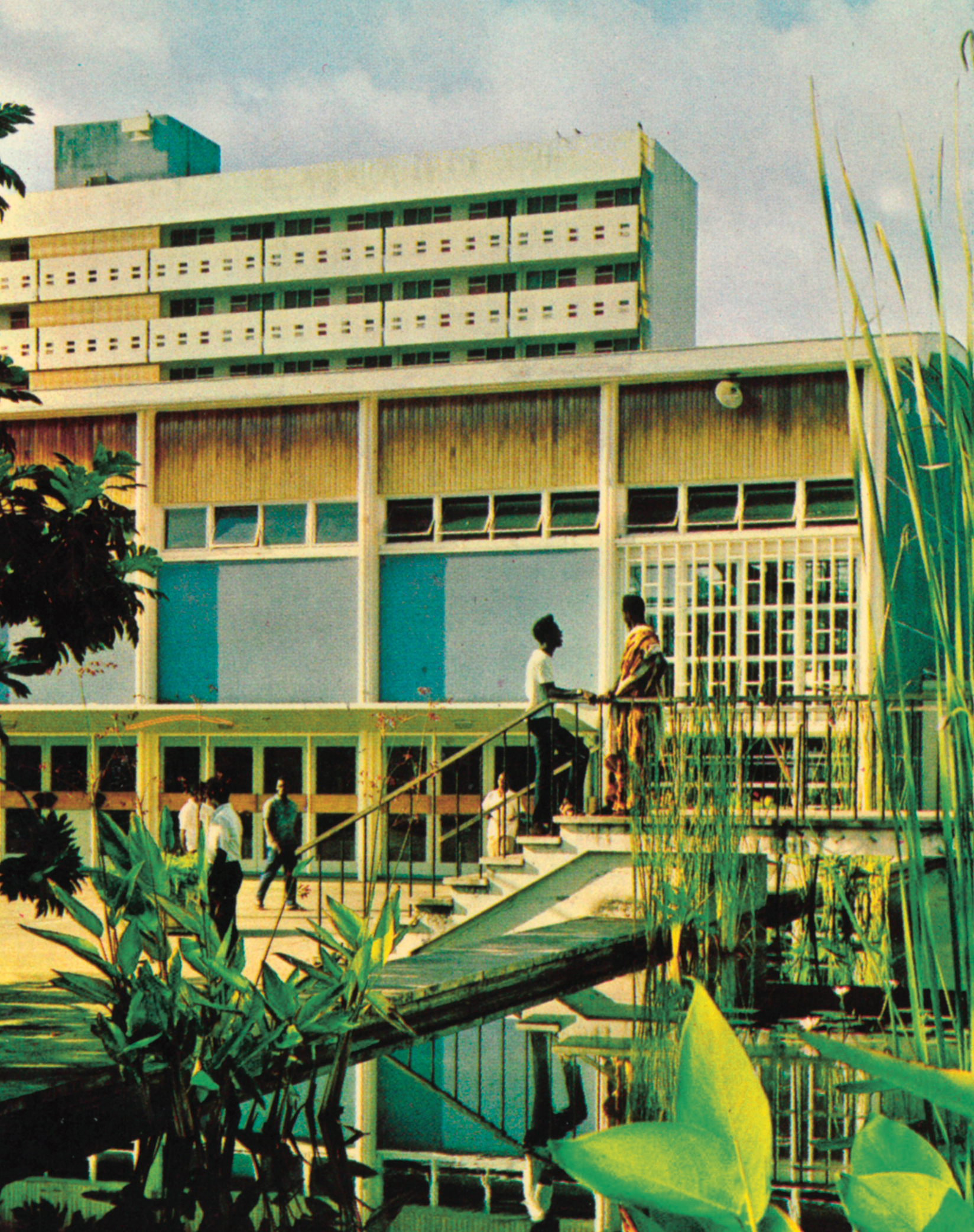
© Cyril Marcilhacy 
© Cyril Marcilhacy 
© Cyril Marcilhacy 
© Cyril Marcilhacy
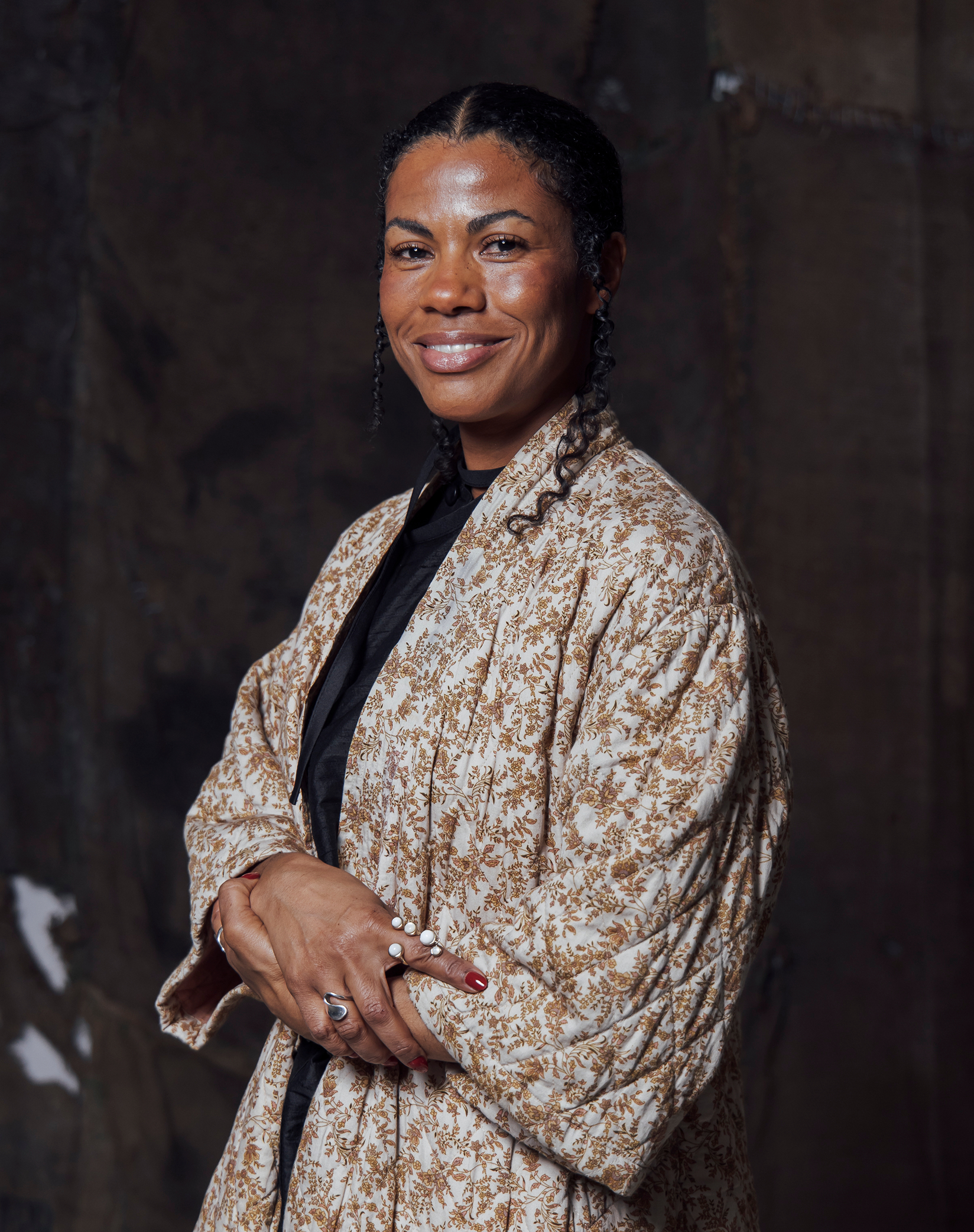
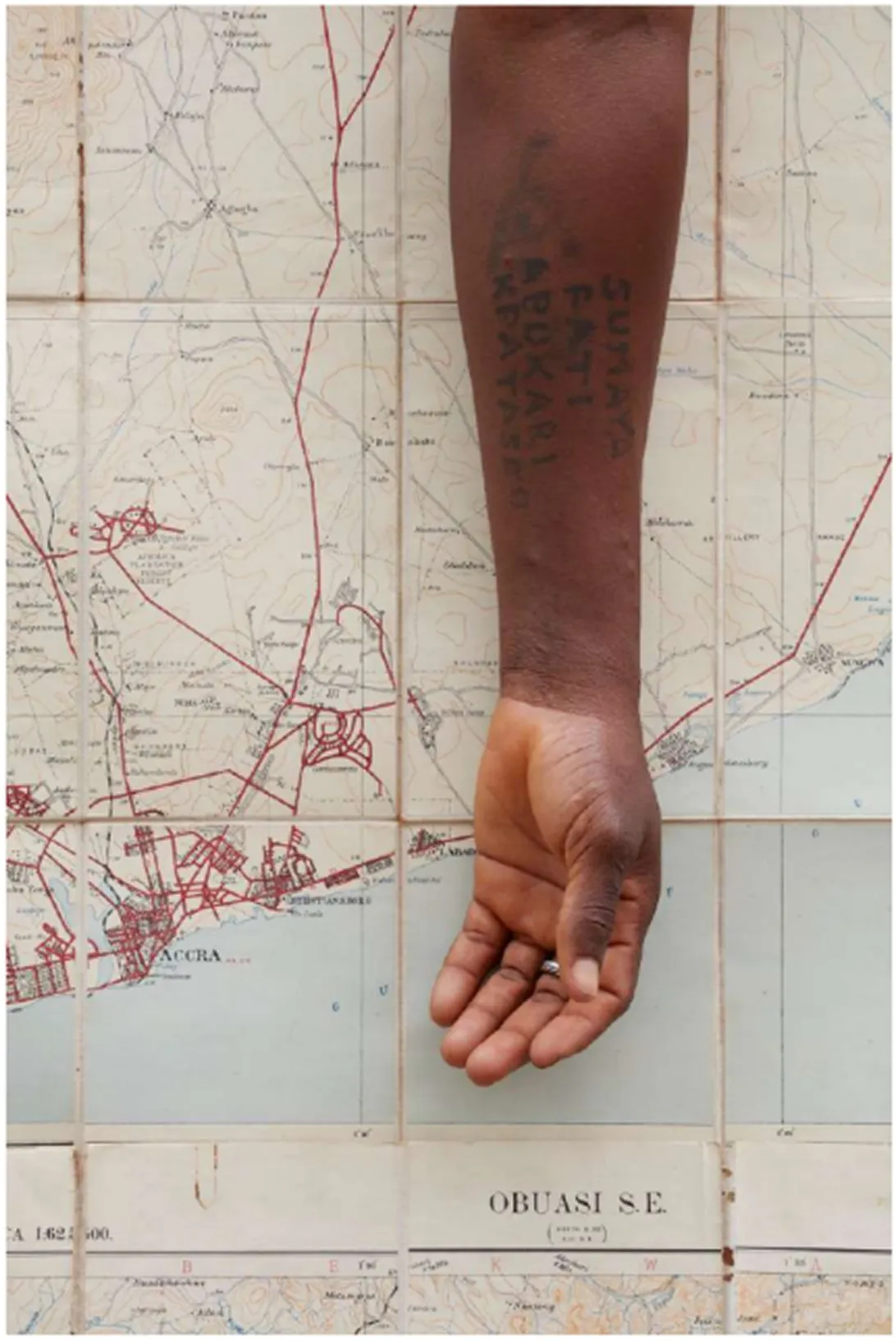
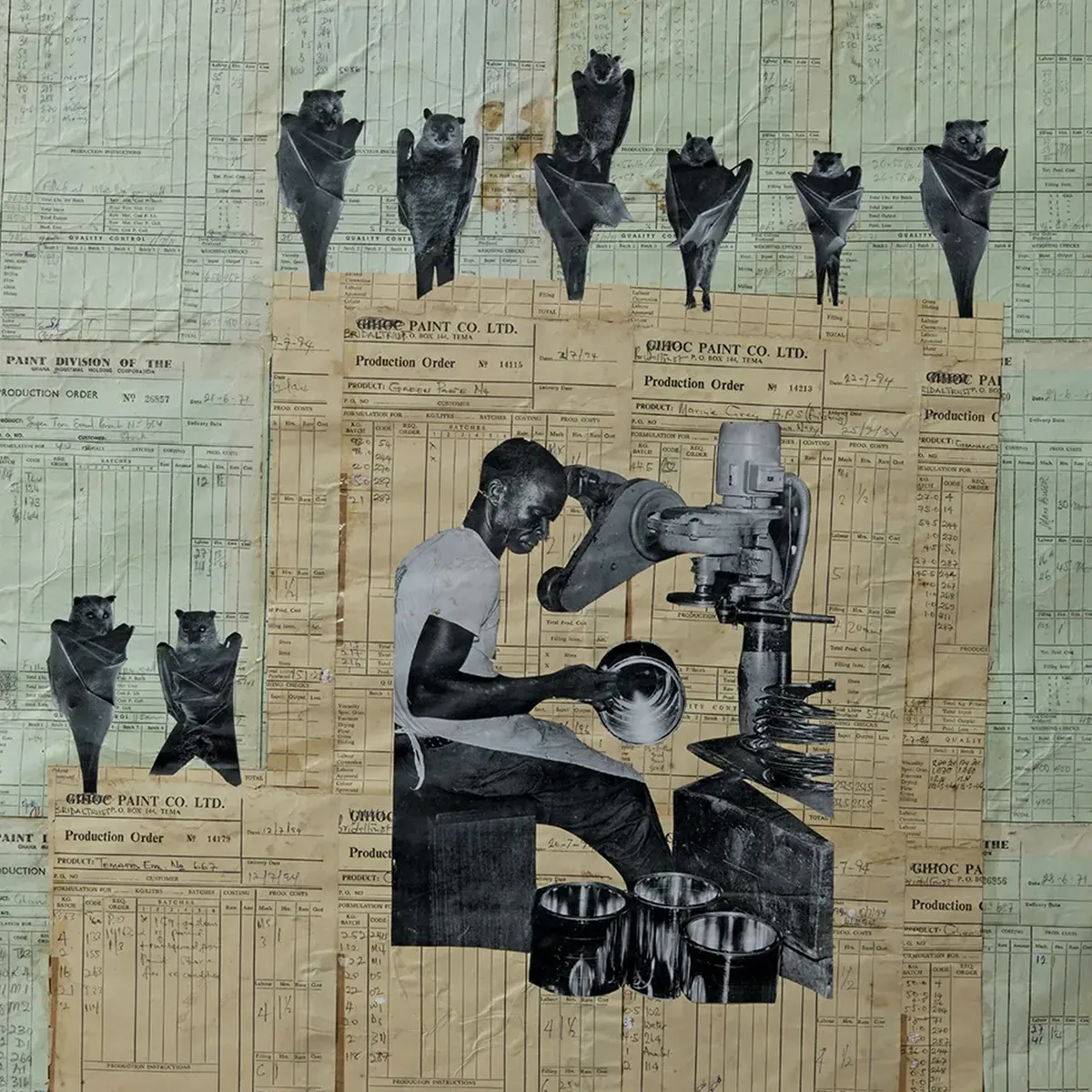
Ibrahim Mahama explores the themes of history, memory, and identity through a variety of media. His collages, such as the Buy When Death Sells series, which brings together photographs affixed to purchase orders from the Ghana Industrial Holding Corporation (GIHOC), document his creative process and daily life at the Red Clay art centres. He meticulously collects and preserves a range of documents: colonial maps of the Gold Coast, photographs from industrial and railway archives, stamps celebrating independence or Patrice Lumumba, as well as his work notebooks. The artist also uses photography to document vernacular practices, the tattooing of names on women’s arms—a marking linked to economic migration—superimposed on colonial maps. The archives section of "Parliament of Ghosts" explores the issues raised by the installation with material samples, British colonial archives, and looted Ashanti stools, in dialogue with the short film "You Hide Me" by Nii Kwate Owoo on the restitution of African works. His collaboration with James Barnor involving the Polaroid 20x24, recreating the "Ever Young" studio, confronts young people in Tamale with the creative potential of a past technology, while integrating digital image collages and AI-generated images to create new symbols and associations.
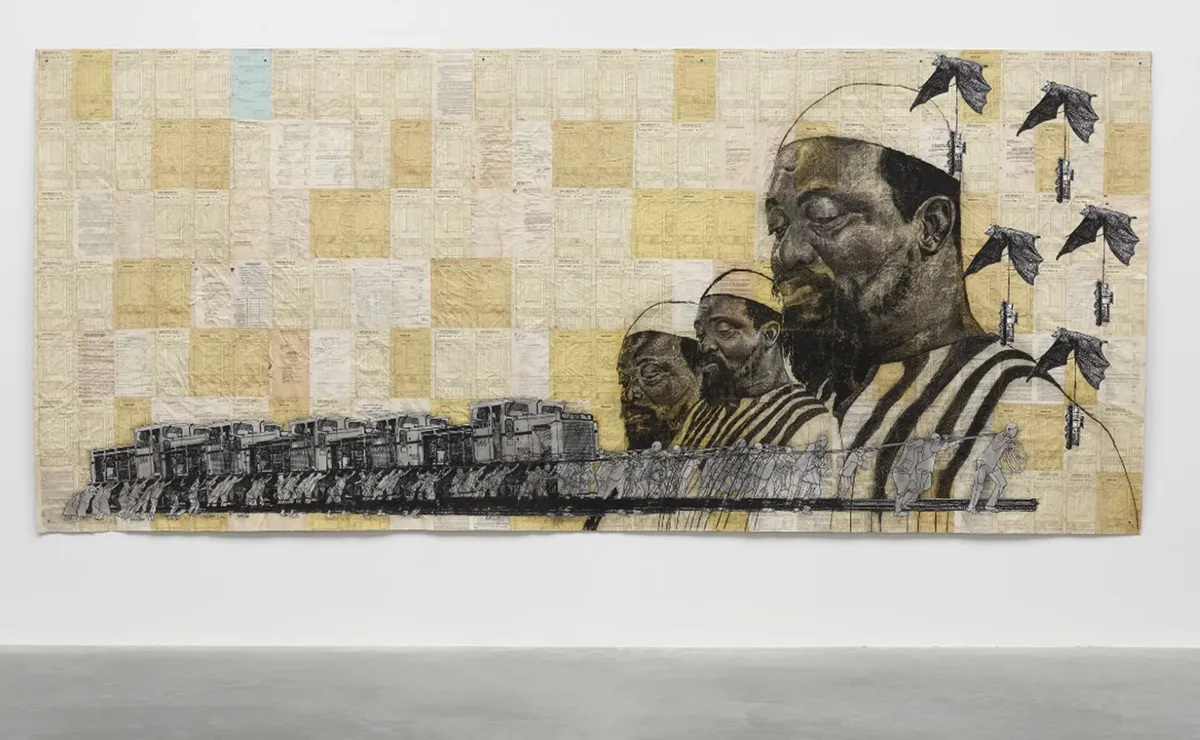
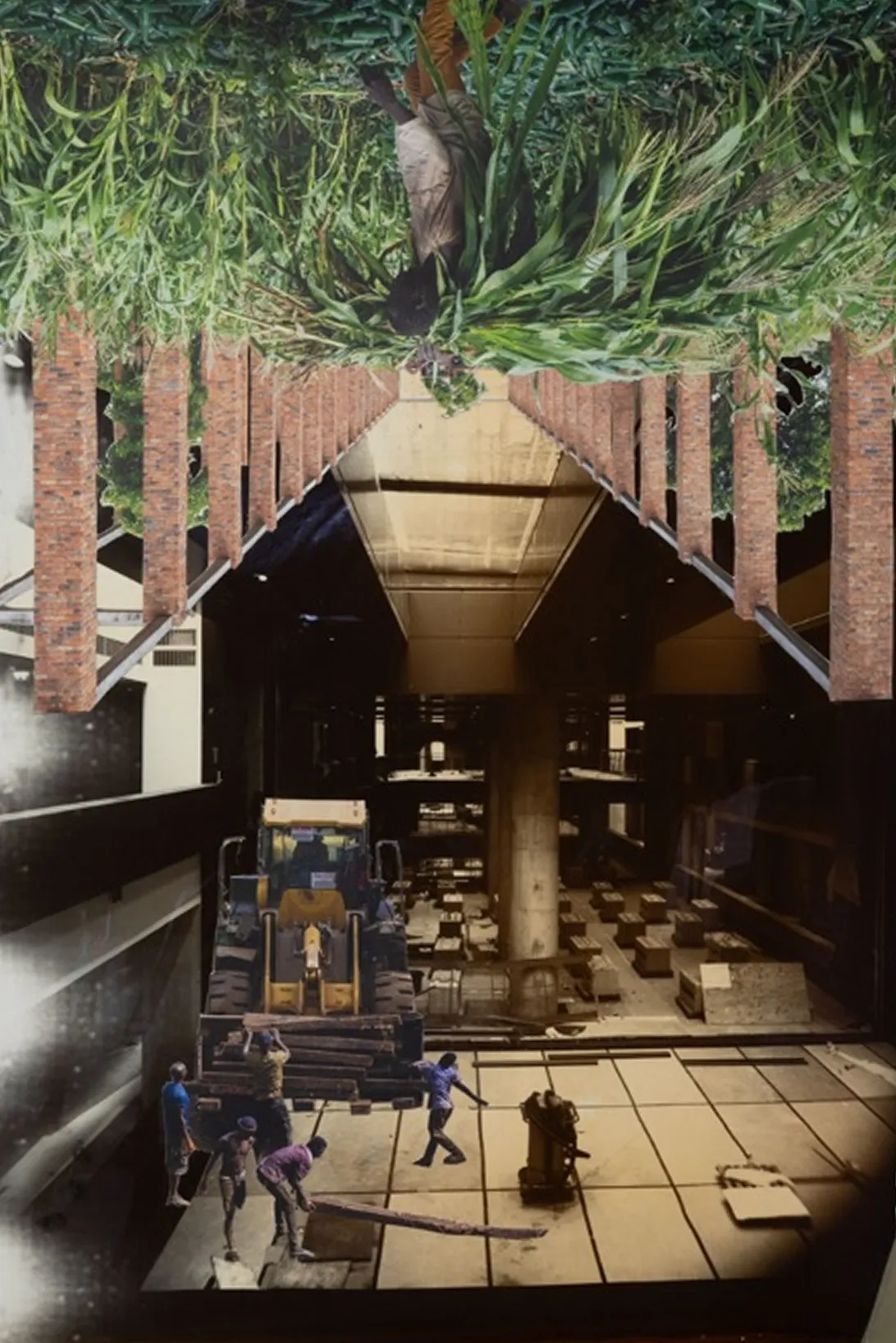
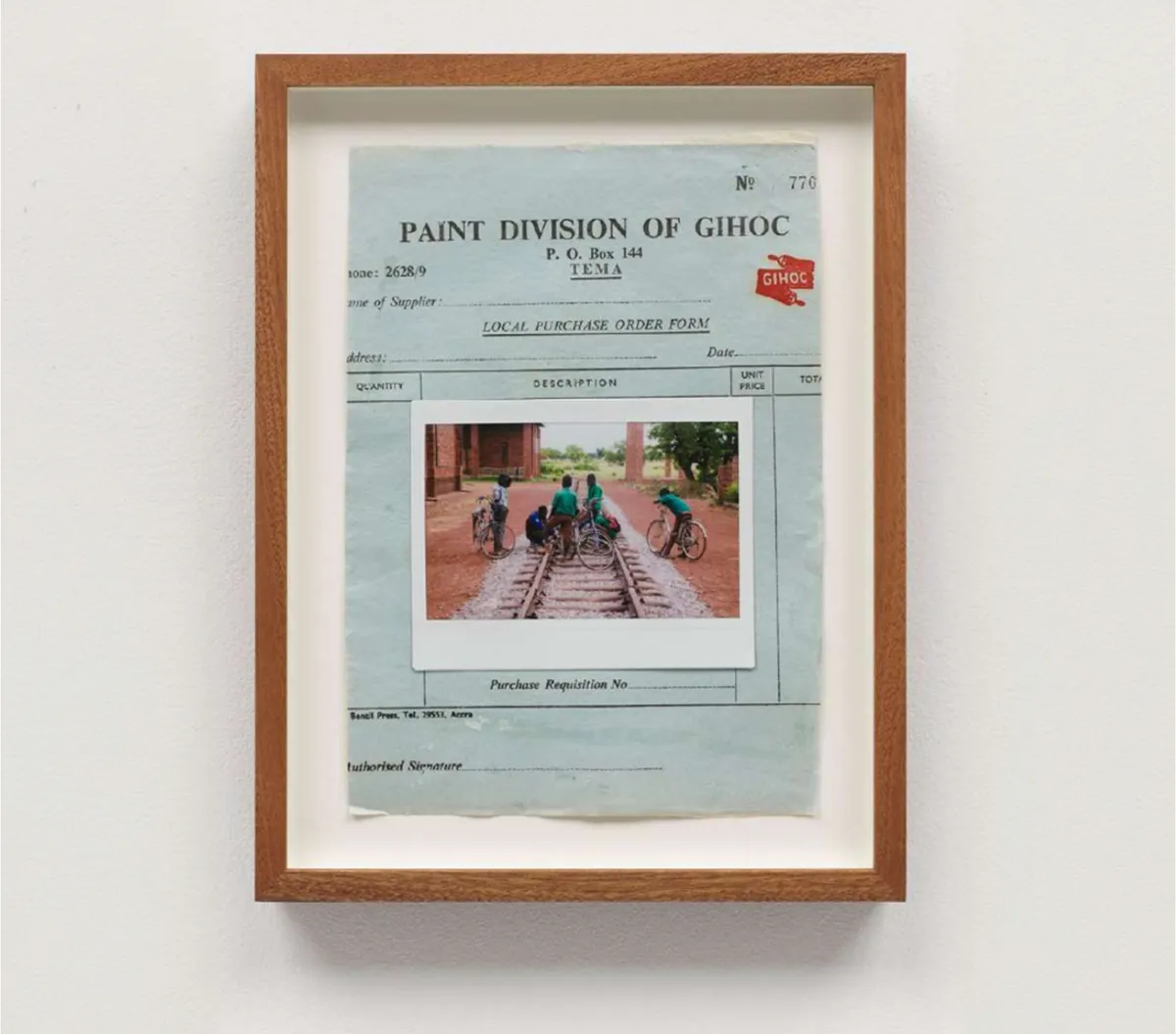
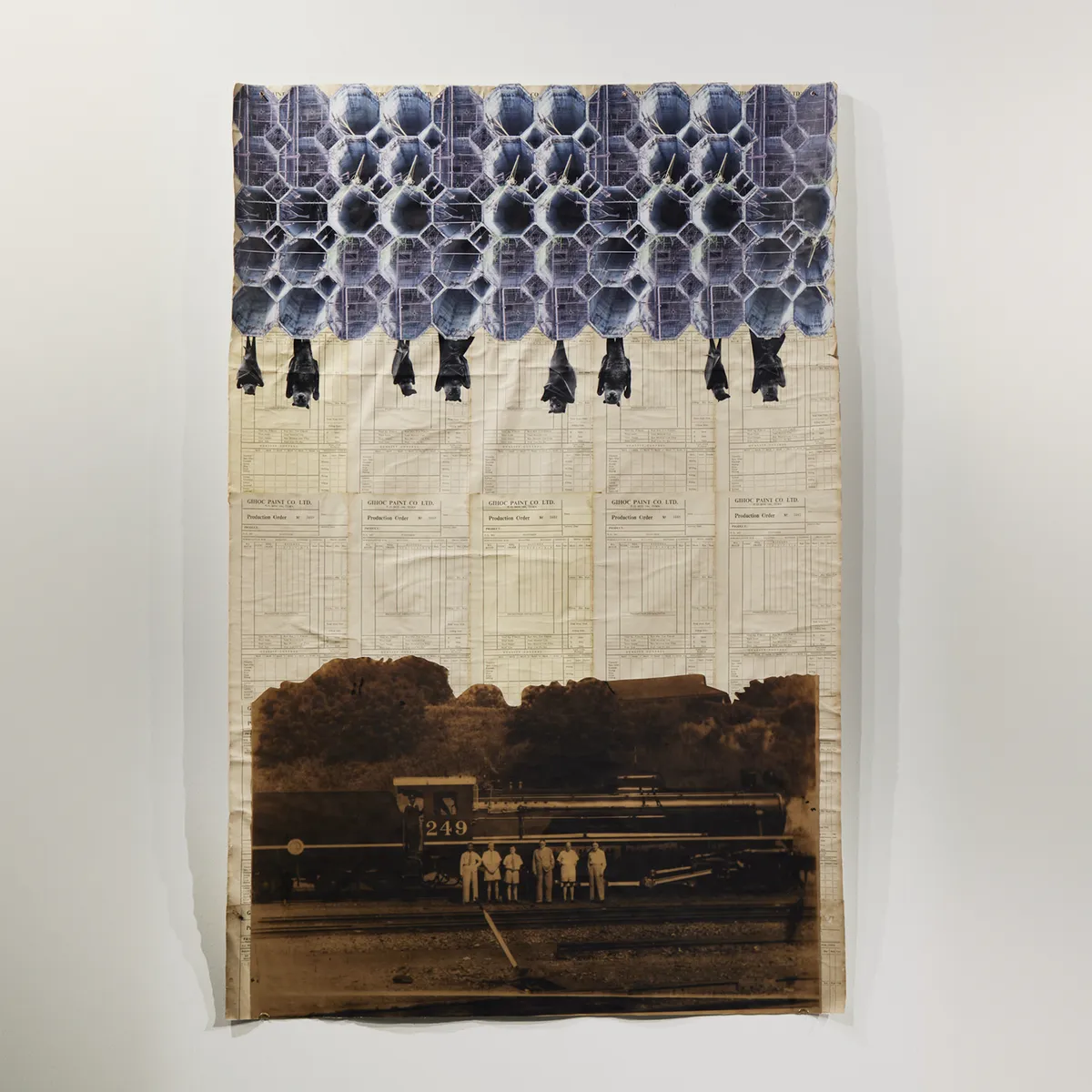
The artists' fragments on the same theme
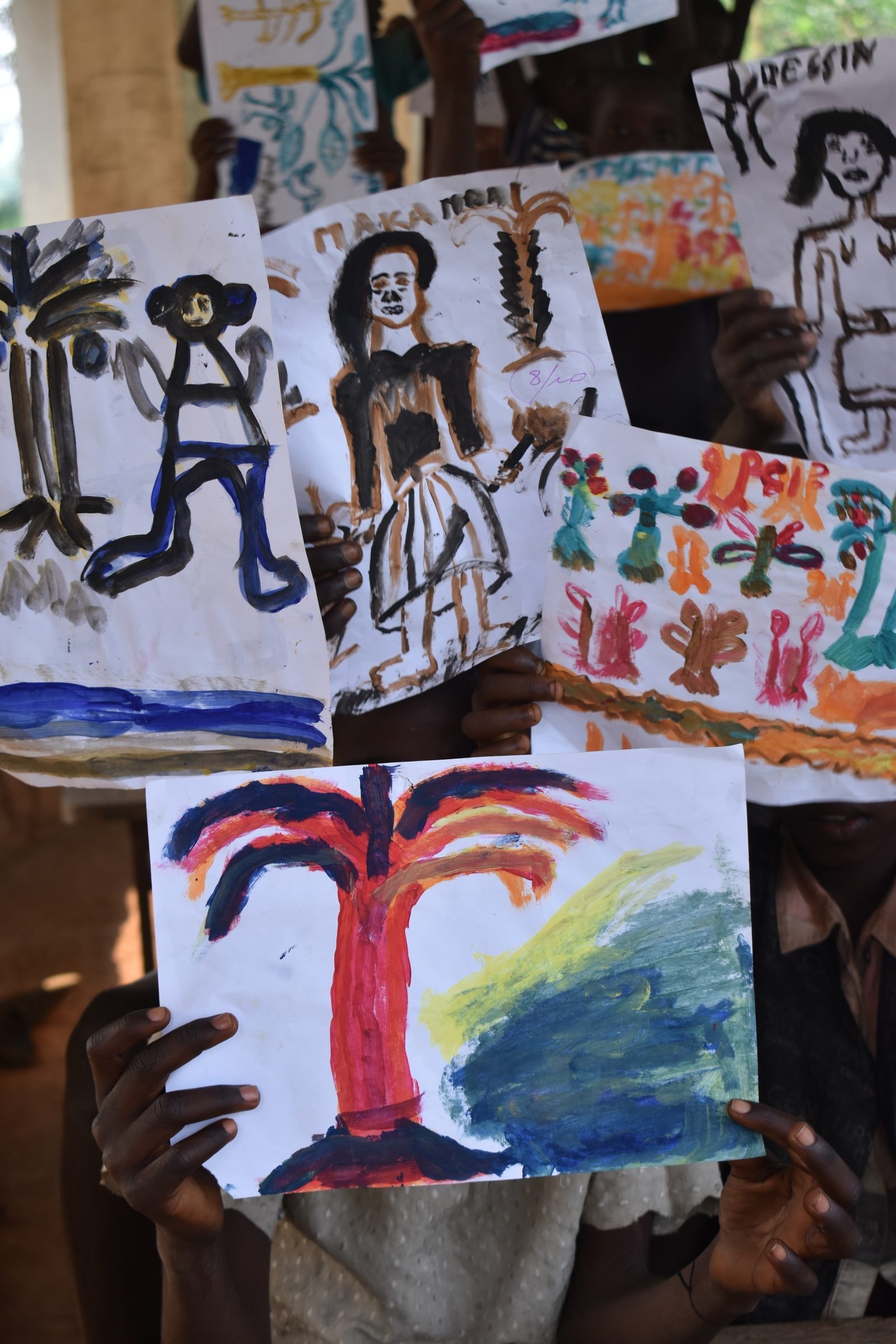
Here we are at Luyalu School. What is Luyalu School? Luyalu School is the school after school. It’s a place for us, for our community—mainly young people, but not only them, women too, and adults—to come and learn everything that is at our disposal, everything we love, everything we want for our community. Young people can learn through art workshops. Women can also learn through art workshops and the classes we offer. Adults can also take language courses like English and French. You can learn many things through Luyalu School, which was again inspired by Brother Ibrahim Mahama. We observed what happened in Tamale and Brother Selom, who is the director of the SEC in Tamale, when he passed through Lusanga. We spent a whole day with him where he advised us and where we were inspired by their journey. And afterward, we set out to open our training center for young people and for our community, Luyalu School.
Images & symboles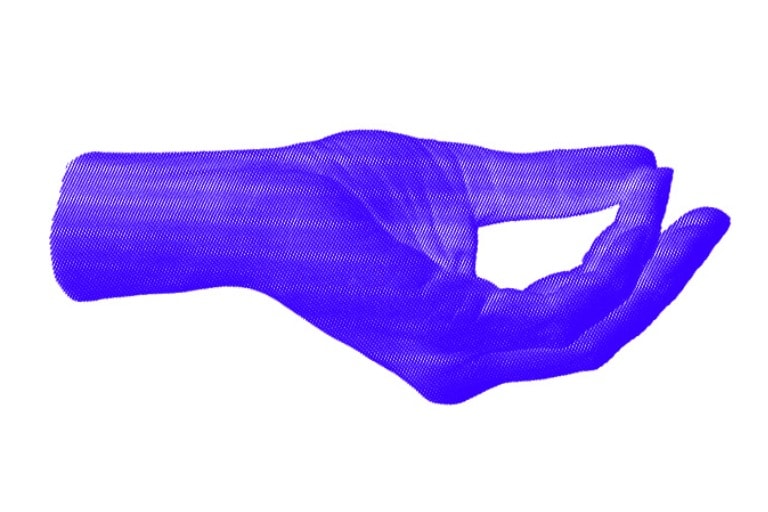
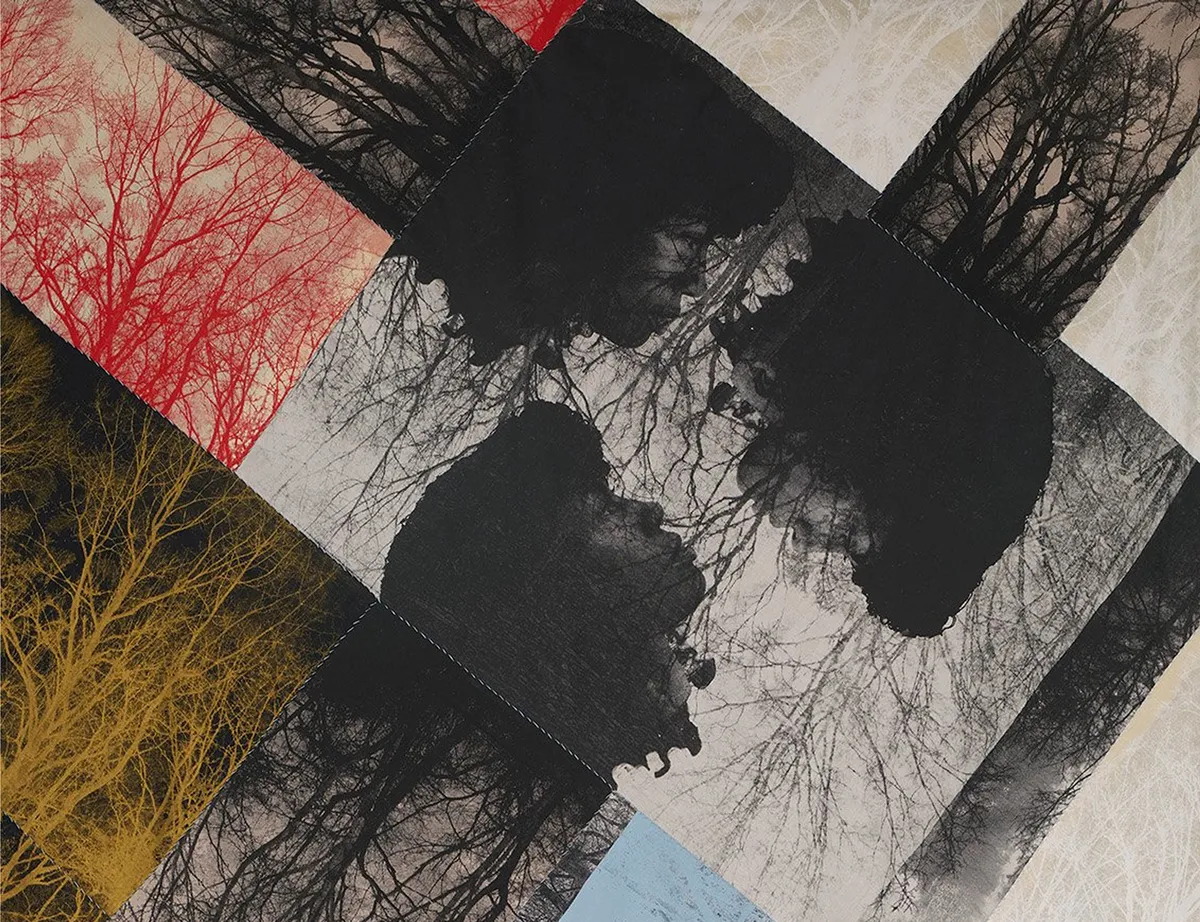
Healing Hands and Hieroglyphs is the first of four chapters in The Myths of Eternal Life (2020–2026), made during and after my cancer treatment in Berlin, where daily walks among the bare winter trees of the Tiergarten and an encounter with ancient Egyptian art at the Neues Museum led me to engage deeply with the Book of the Dead. The chapter turns the countless hands of doctors and nurses that examined me, an experience that felt like being dismembered, into a symbolic language of care, drawing a parallel with hieroglyphic hands that pass on vital knowledge for the journey to the afterlife.
Images & symboles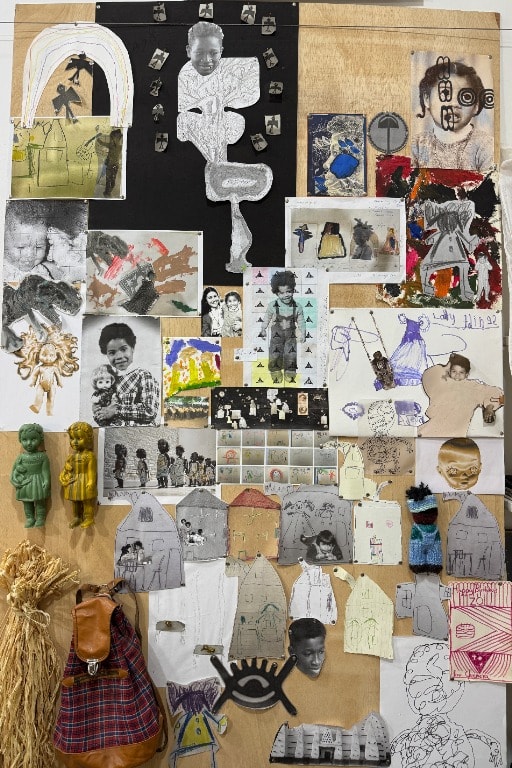
Studioview/Visionboard to Give Me Back My Black Dolls: Tree drawings of my son when he was 12 and 16 years old defined the visual language in the textile work SunSum. Junior has been born when my father passed, therefor he carries not only his name but also inherited his SOUL. Visually the trees represent the tree of life or also the family tree which connects the physical world with the spiritual world.
Images & symboles