The artists
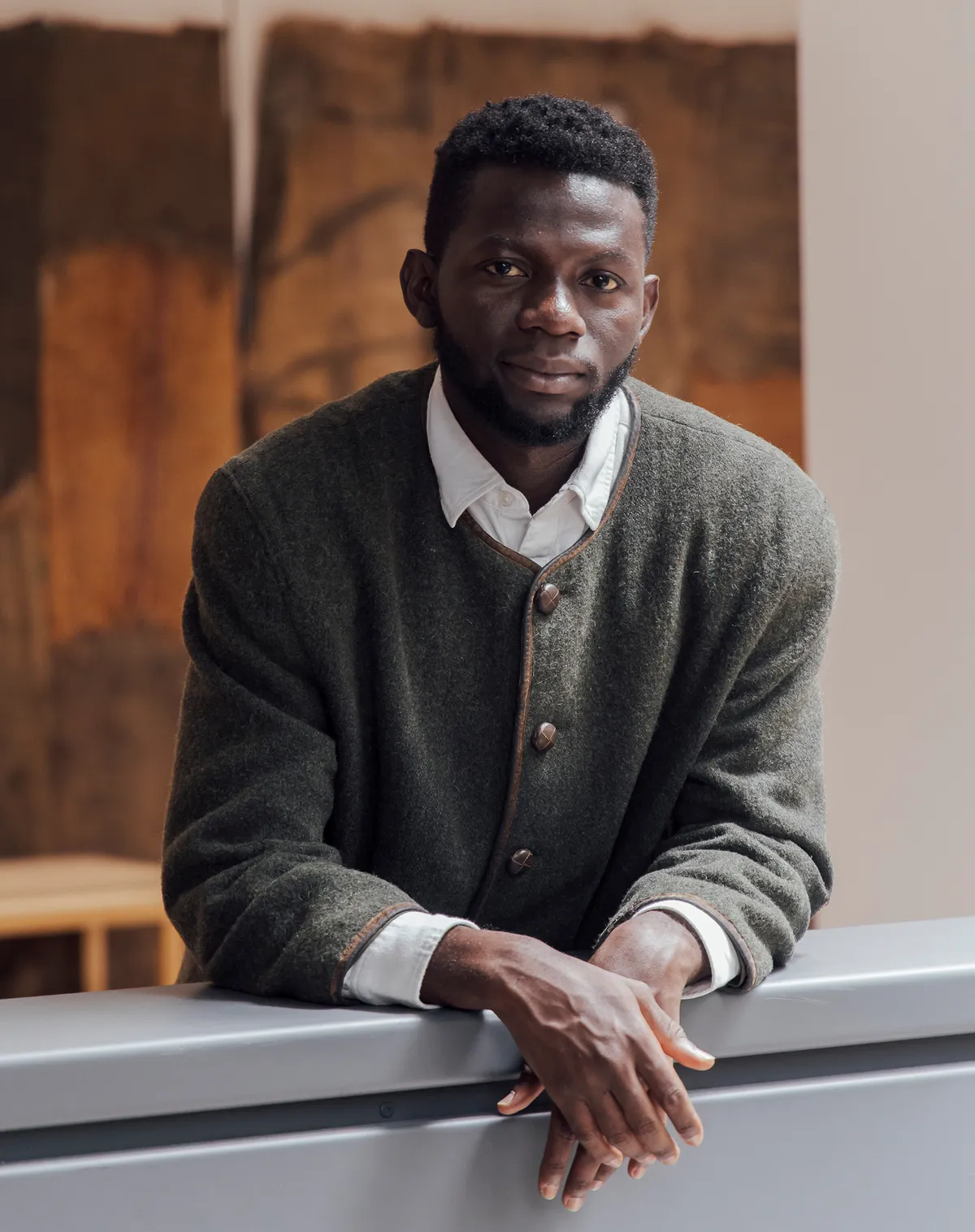
GideonAppah
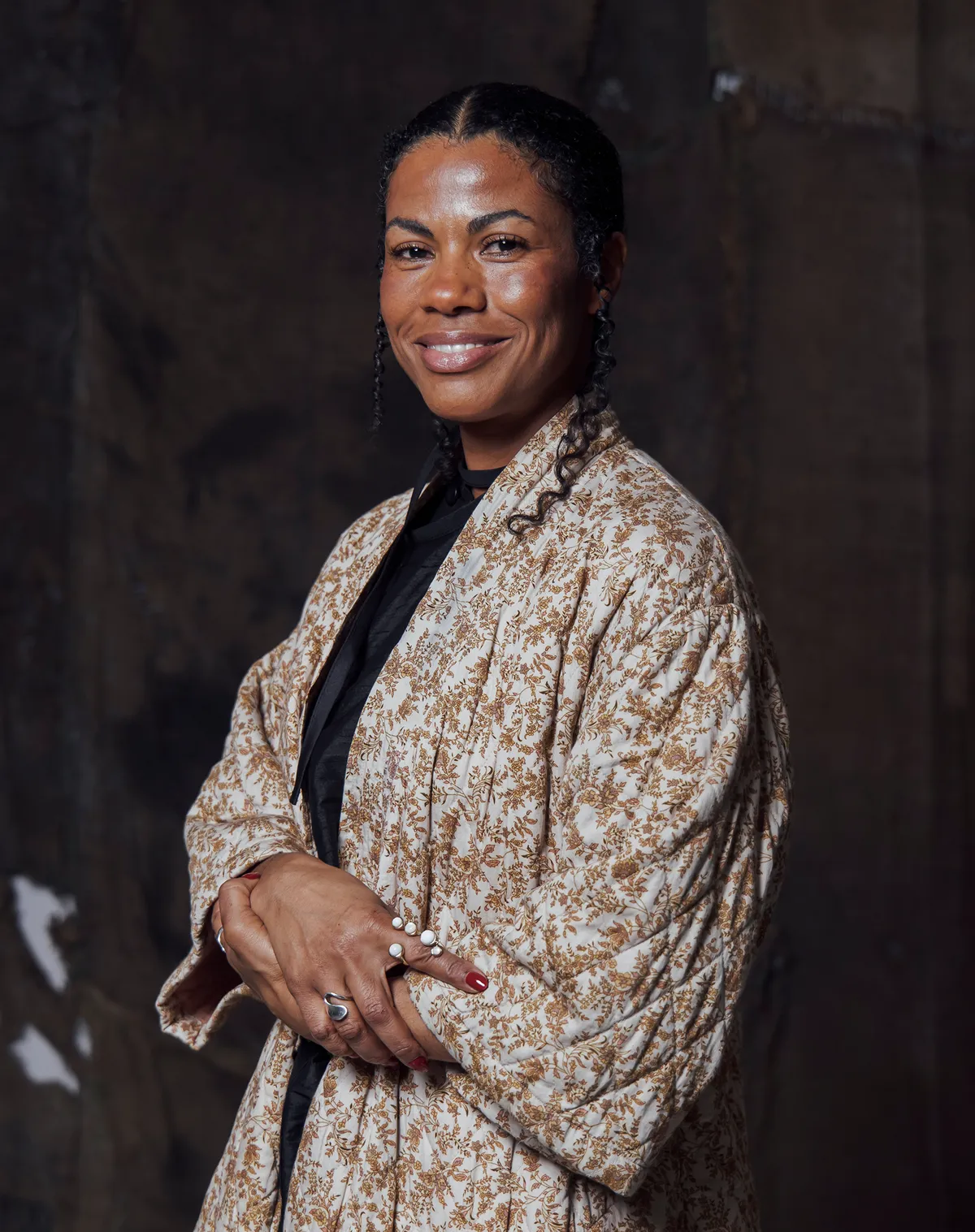
Gideon Appah graduated from Kwame Nkrumah University of Science and Technology (KNUST) in Kumasi, where he obtained his Bachelor of Fine Arts in 2012. Through painting and drawing, he explores the memory, history, and popular culture of Ghana. His works, inspired by memories, archives, and collective narratives, create a poetic universe where reality and the imaginary meet.
Gideon Appah builds his artistic universe from his memories, dreams, and experience of contemporary Ghana. Educated at KNUST in Kumasi, he has developed a painting practice deeply rooted in memory and recollection. Guided by the Akan principle of Sankofa-which encourages looking to the past to better build the future-he explores the connections between personal history, collective memory, and Ghanaian identity.
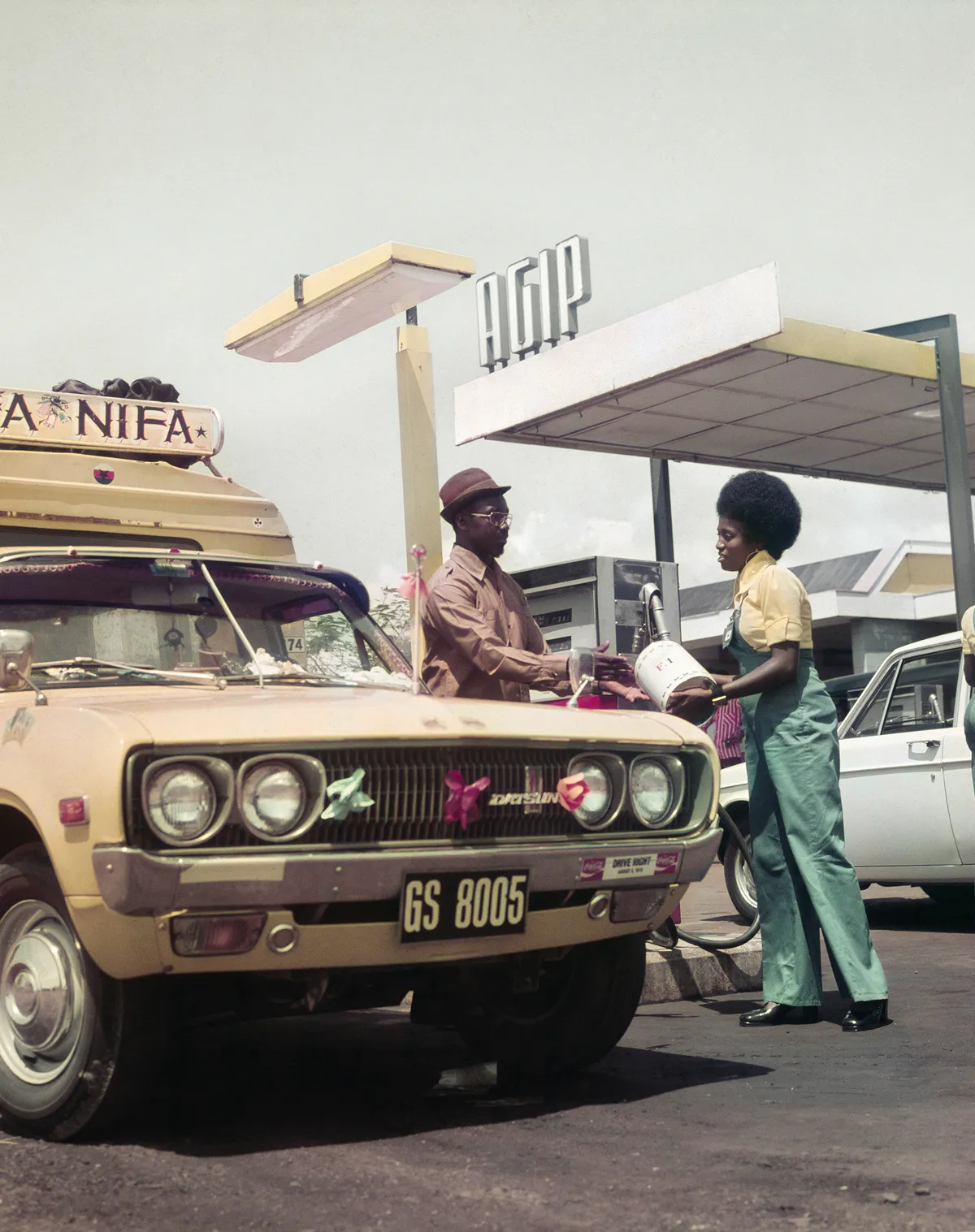
His works draw inspiration from photographic archives, cinema, and Ghanaian popular culture. Using newspaper images from the 1950s to the 1980s, old films, family photographs, and scenes observed in the street, he recreates a Ghana that is both real and imaginary. His paintings revive the atmosphere of the decades following independence, a time marked by modernity and social transformations, including the development of leisure activities and nightlife.
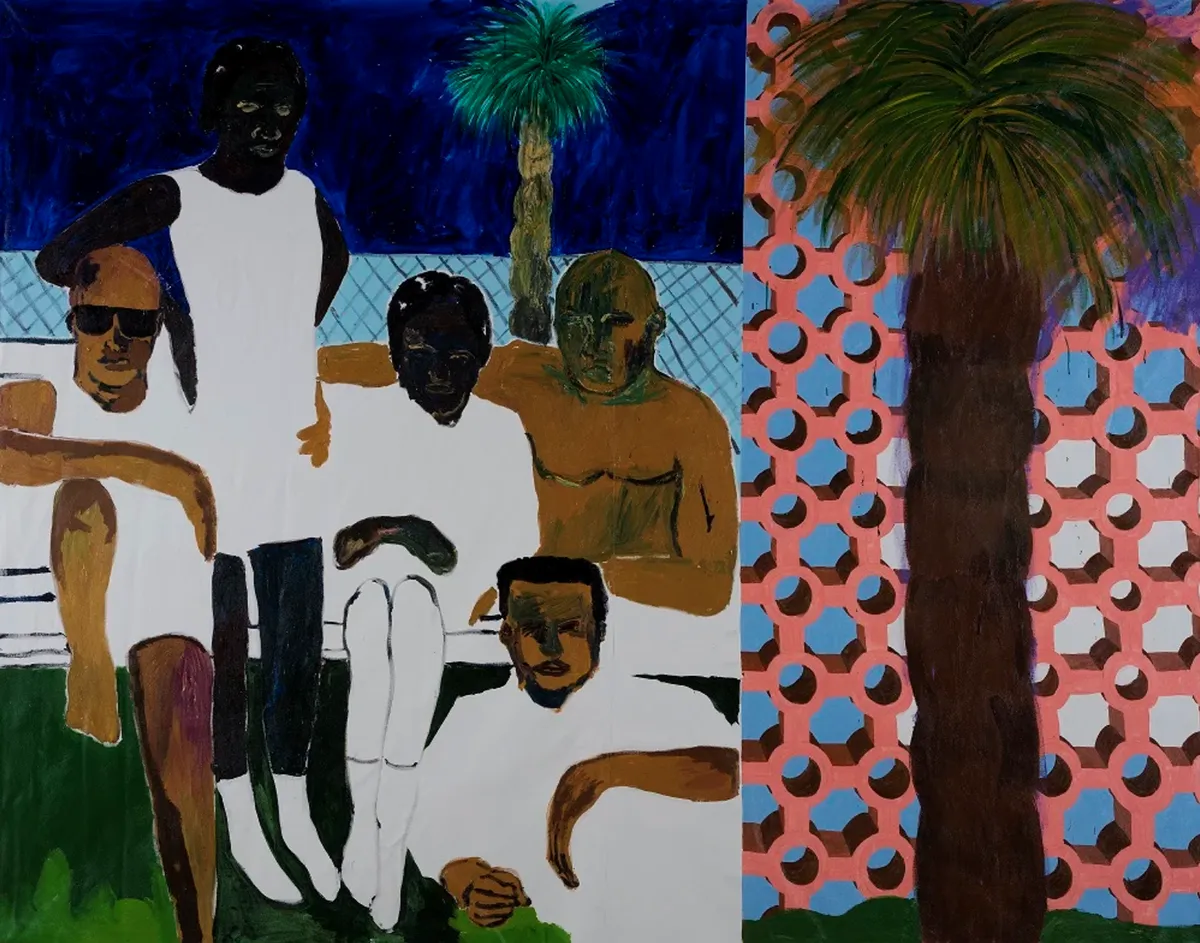
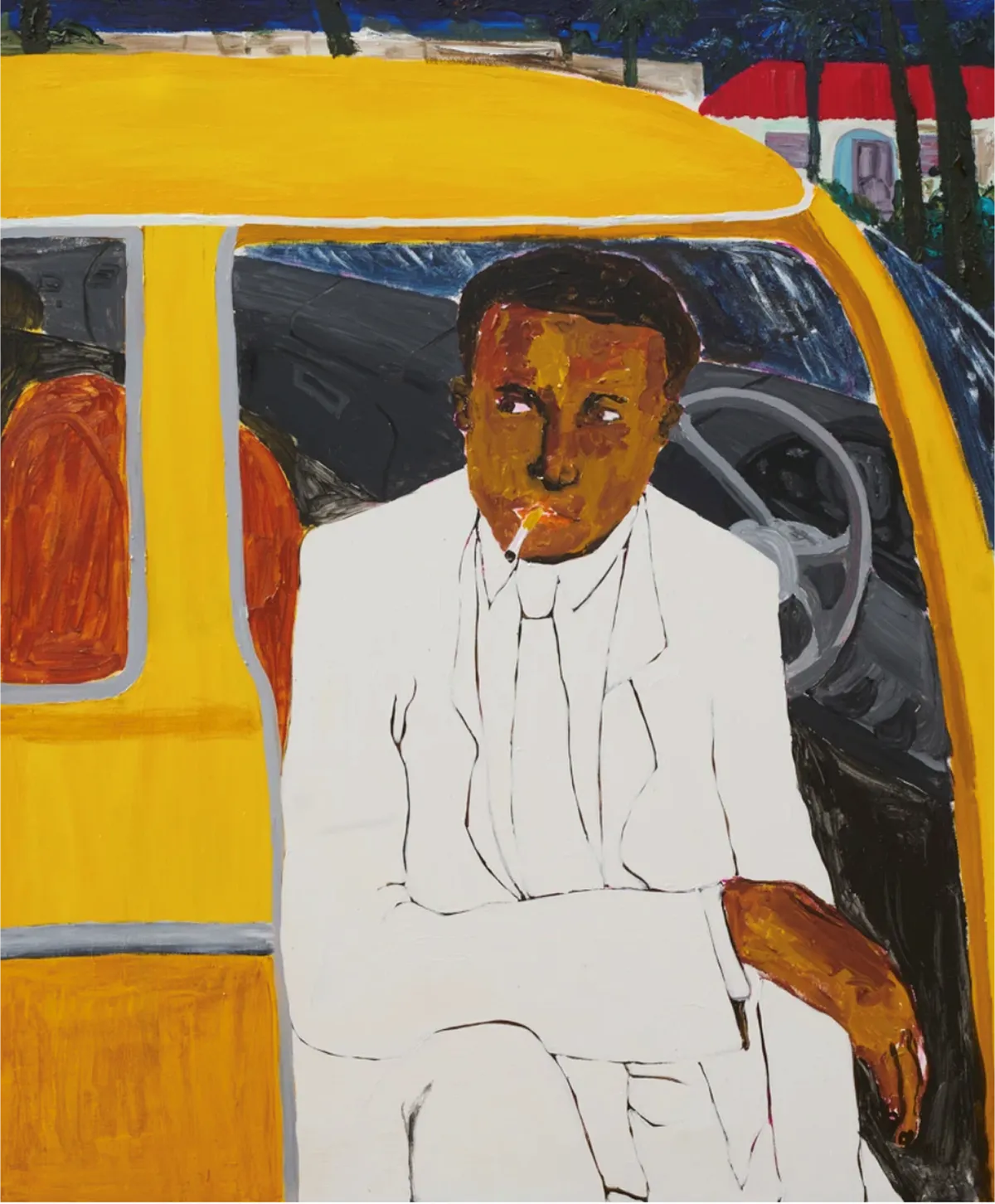
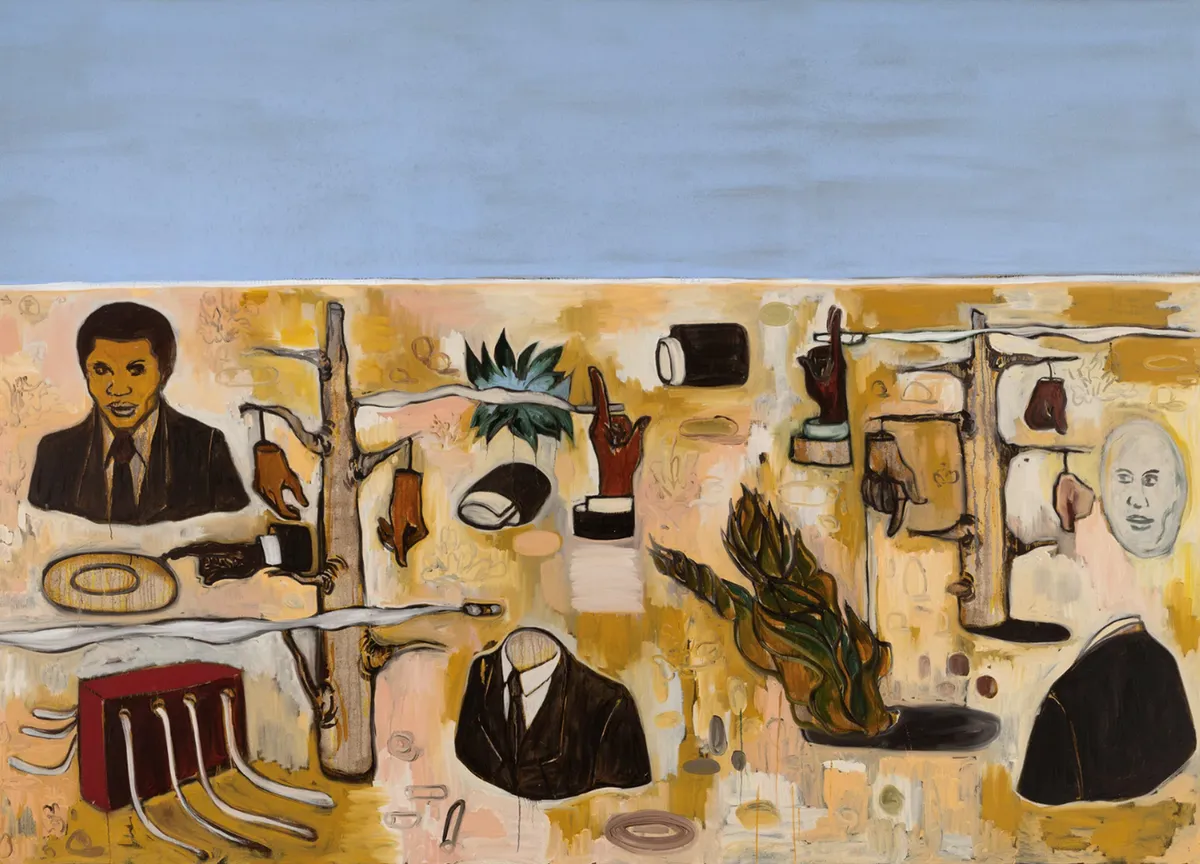
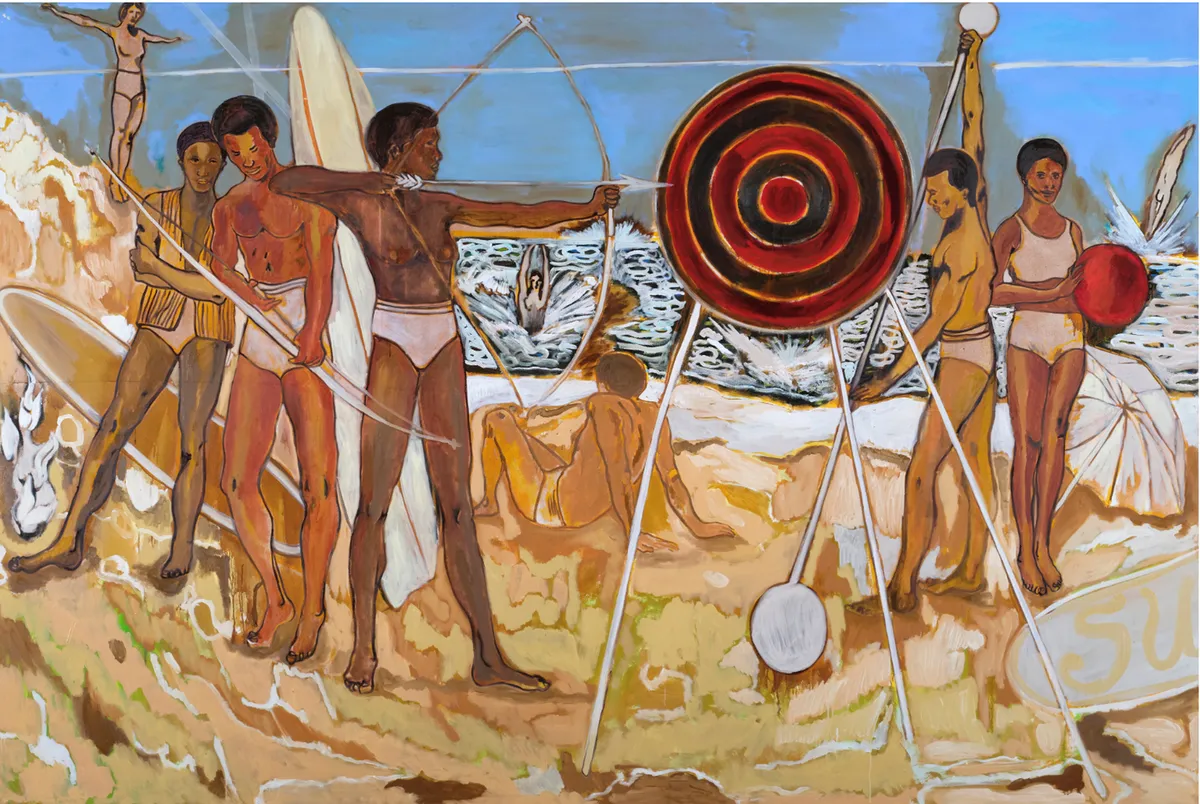
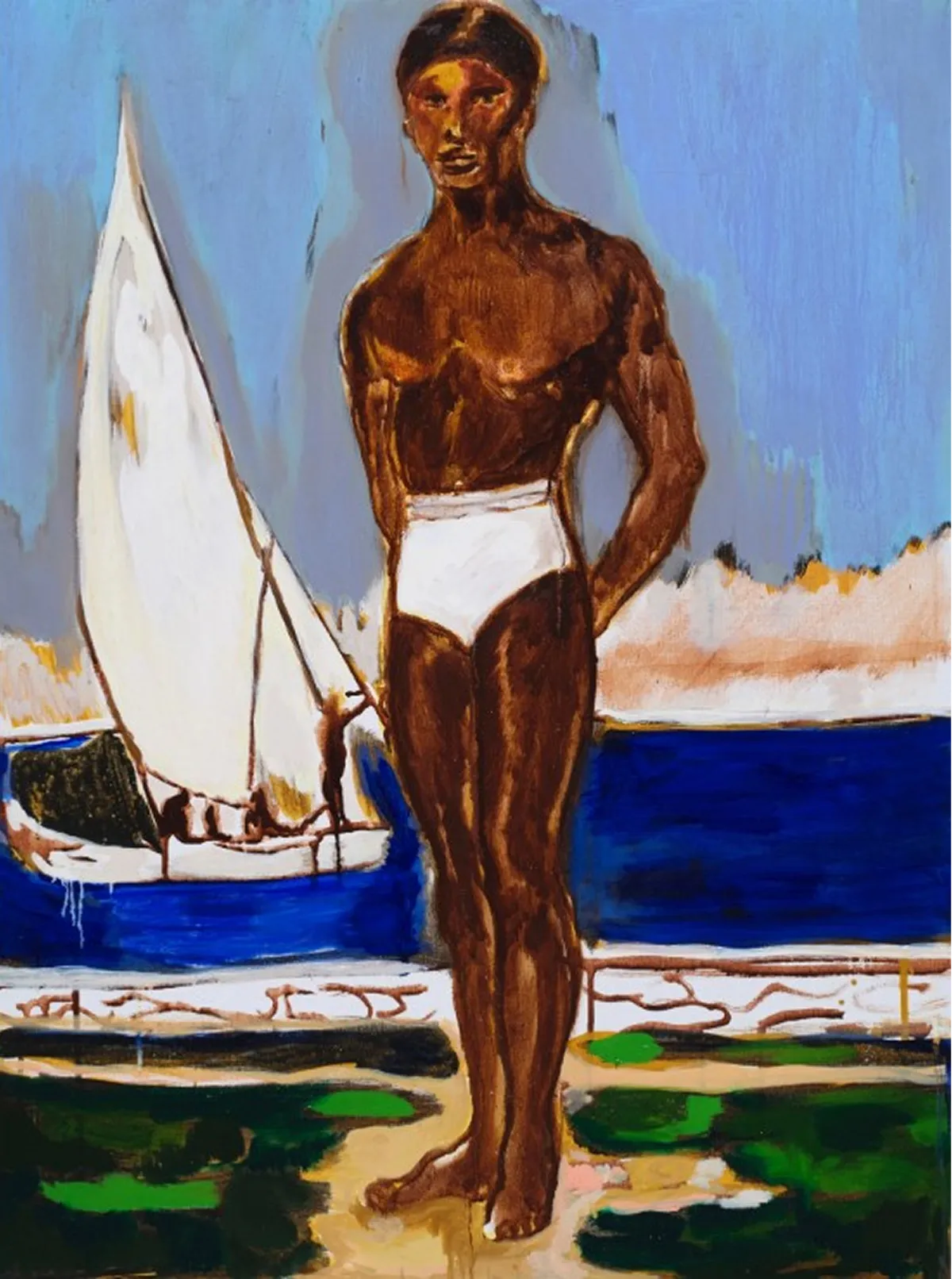
Over the course of his career, Gideon Appah has developed a visual language recognizable for its intense colors and dreamlike compositions. Initially inspired by his family and immediate surroundings, his paintings later came to feature fictional characters drawn from archives, the street, or his imagination. Works such as Rain Bath, Lovers Park, Rex, or The Gathering blend landscapes, architecture, human figures, and historical references in narratives suspended between reality and dream.
Between myth and nostalgia, his work offers a poetic vision of Ghana. Influenced by the history of the representation of Black figures in art and by major modern painters, Gideon Appah creates images in which the past interacts with the present. His luminous scenes, often bathed in a meditative atmosphere, invite reflection on memory, the passage of time, and the narratives that shape a society.
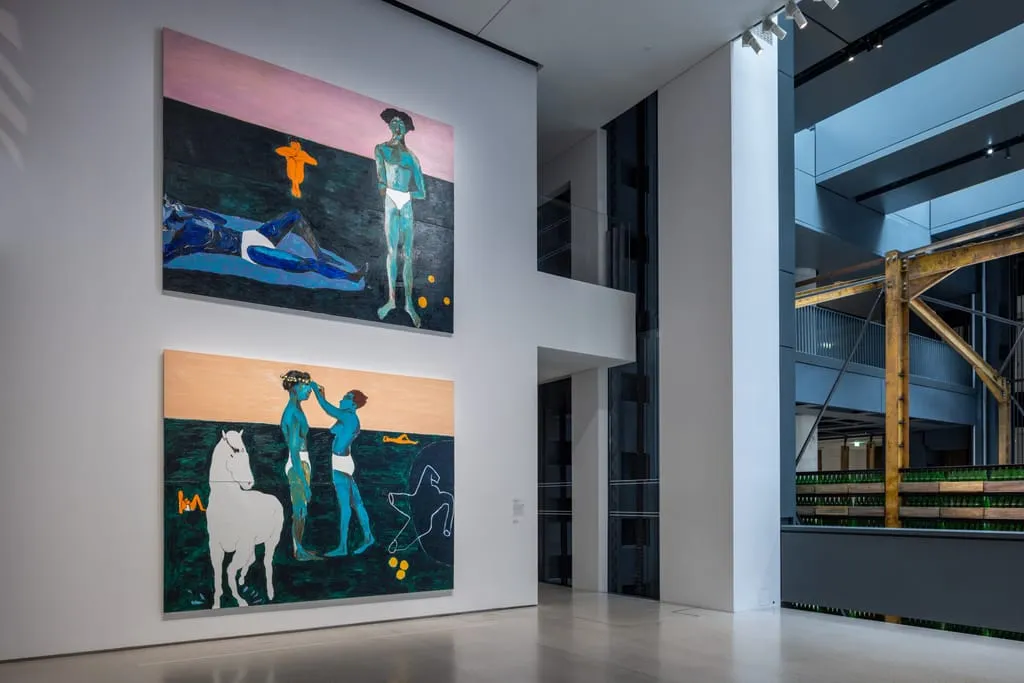
© Thibaut Voisin 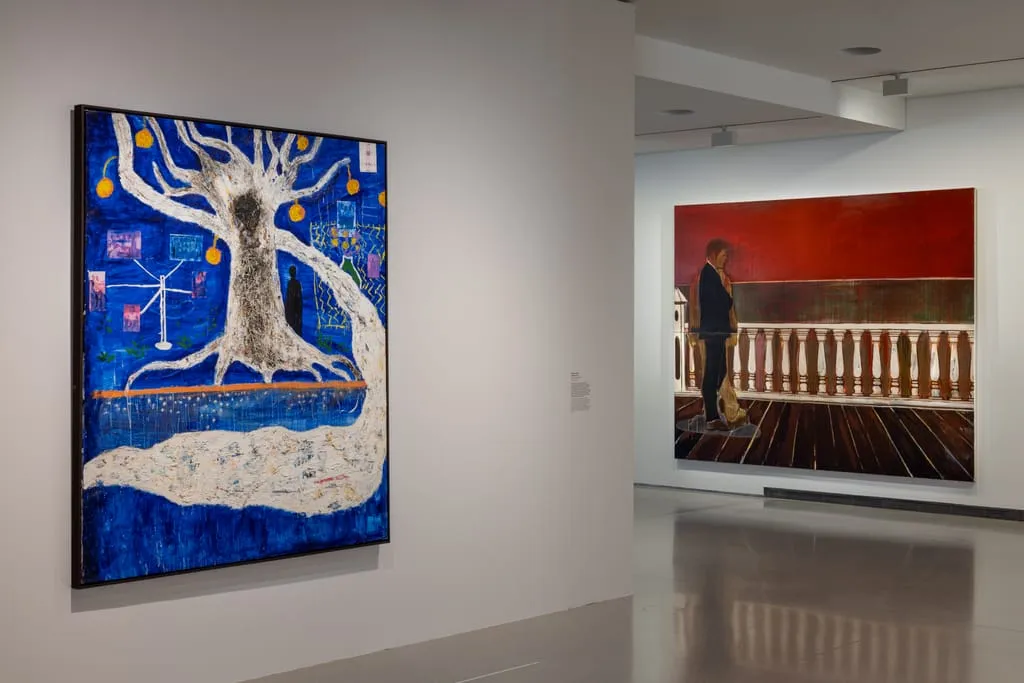
© Thibaut Voisin 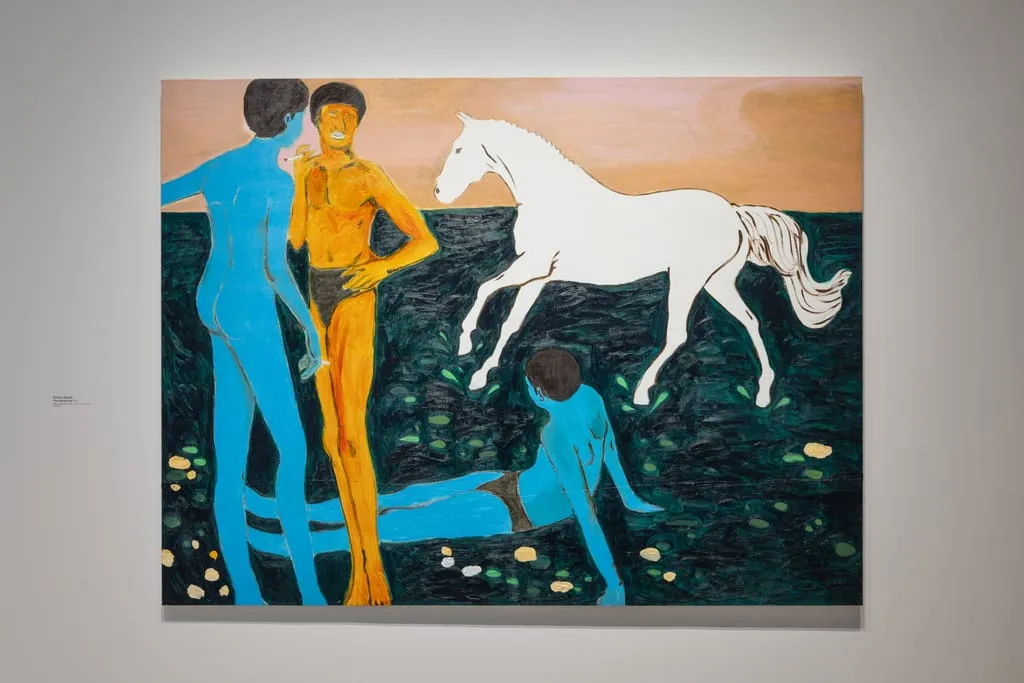
© Thibaut Voisin
The Arts Centers
His contributions to the Great Harvest
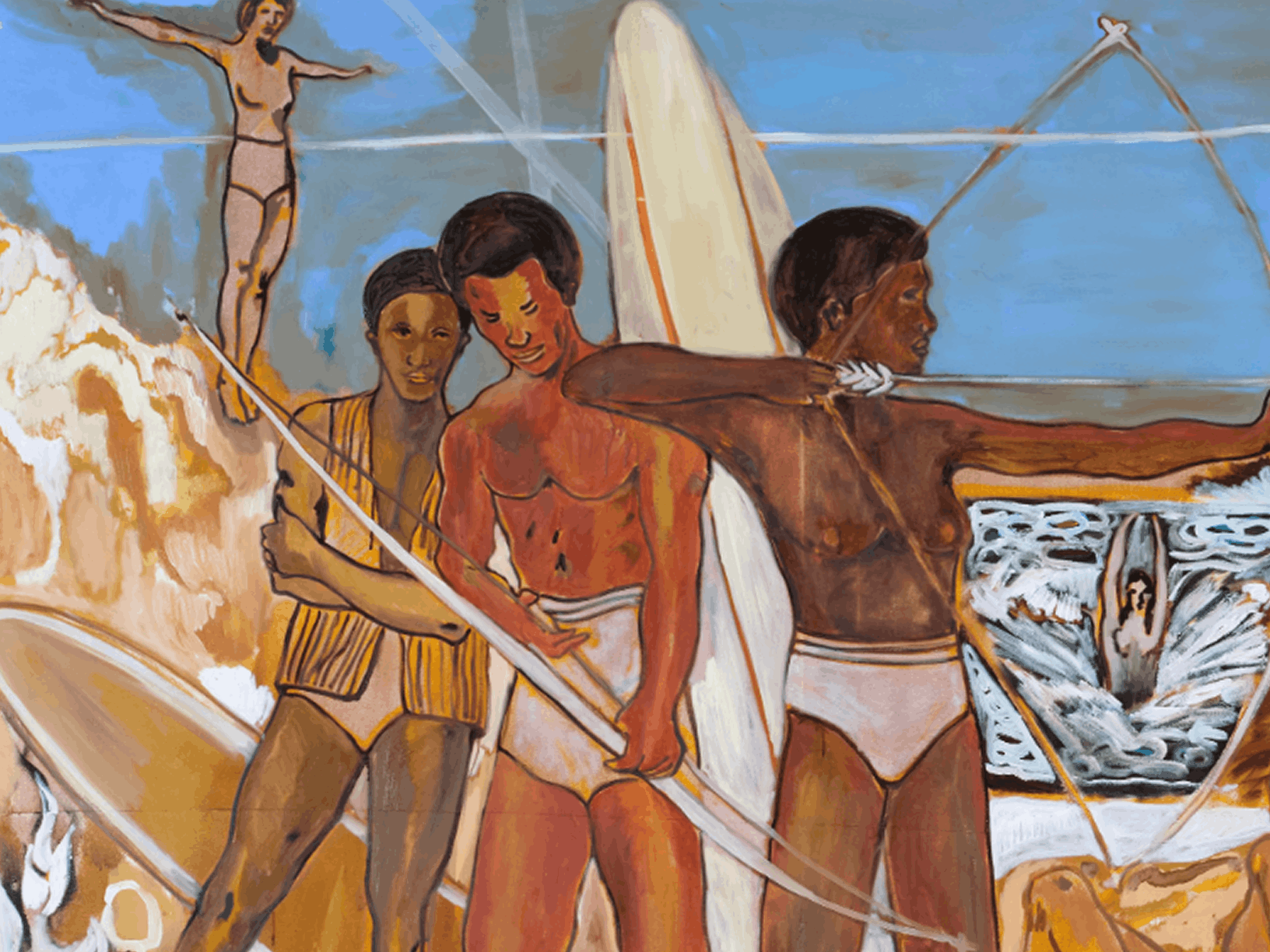
From an interview made in Accra, Ghana, November 2025 I visited a community in Takradi called Buzuwa. There were a lot of surfers there, but also locals. So you could see a lot of fishermen, their boats, and people doing all sorts of activities on the beach. I went back to my studio in Accra to get to work. At first I was attracted by the relaxation that reigned most of the time at the top of the rocks, which I observed among some inhabitants of this place. So I started to do some paintings on this theme.
Images & symboles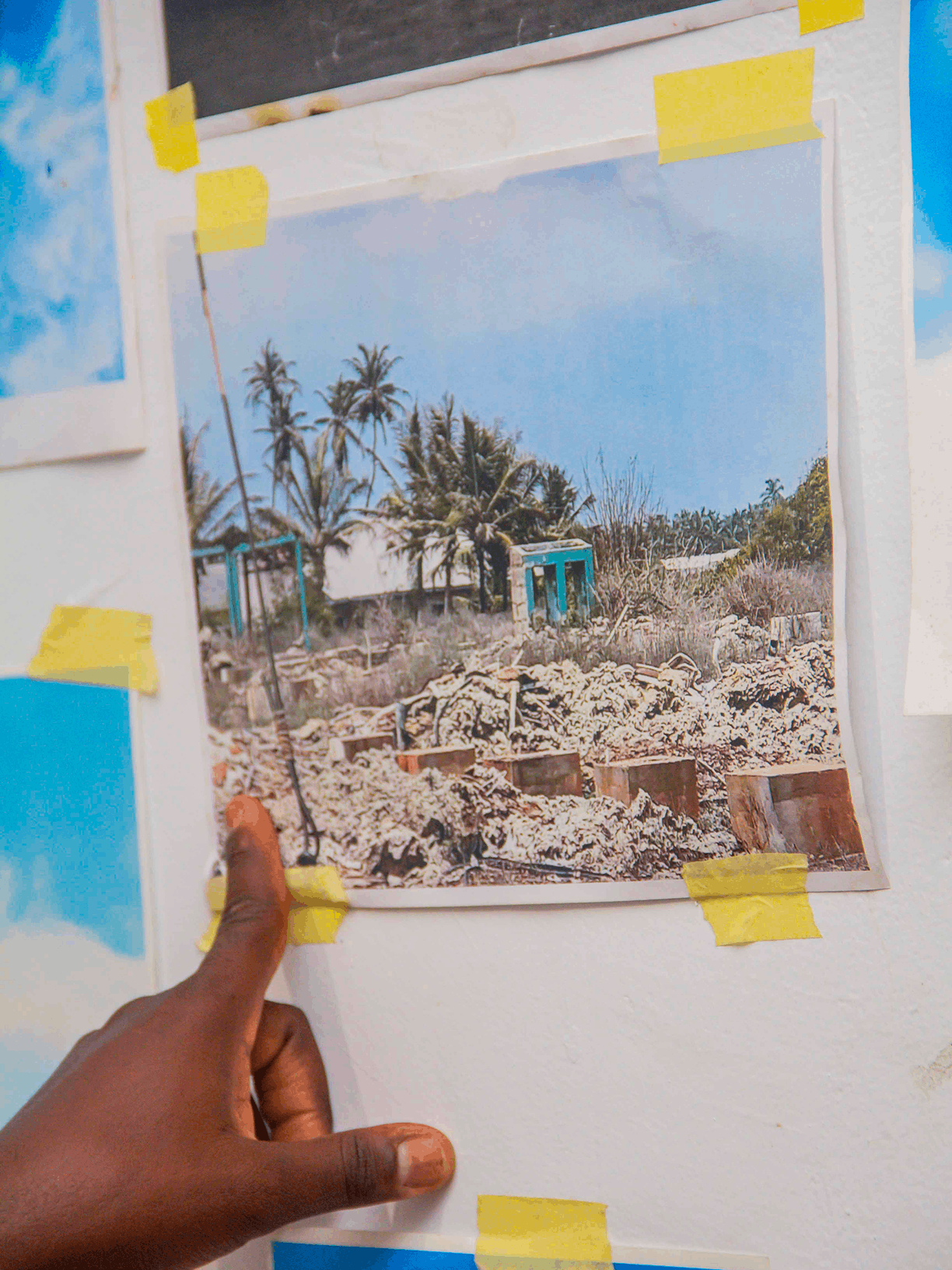
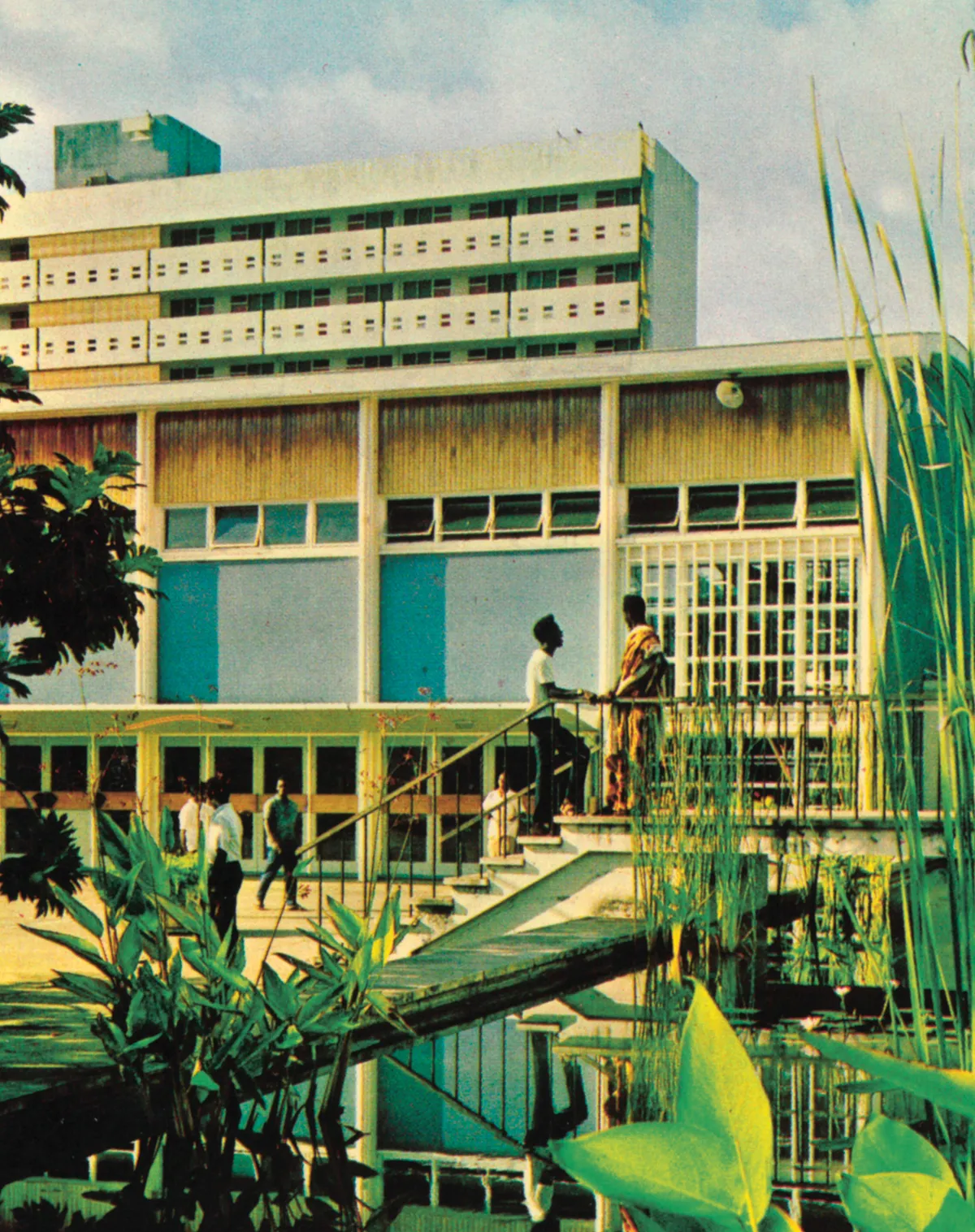
From an interview made in Accra, Ghana, November 2025 Initially, I saw a photo of a very old building on the Internet, and that's how it all started. I had always wanted to paint buildings, especially since I was doing a lot of portraits at that time. I wanted to see how I could do this without including a human figure, and if the work could still have substance. No human figure, just the building. But to achieve this, I said to myself: “Why not paint the building and then cover it with stars, while representing its reflection backwards on the canvas, but in a more diffuse way? ” That's how this project came about. So I did the projection. I used a projector to project the building or architecture onto the canvas, and I also used a projector to project the stars. Then I started the tedious process of painting the stars on the canvas. And in doing so, I also sought to create harmony and balance within the work. Once that was over, I wanted a more... I wouldn't say ghostly result, but almost a bit more ghostly.
Archives & mémoire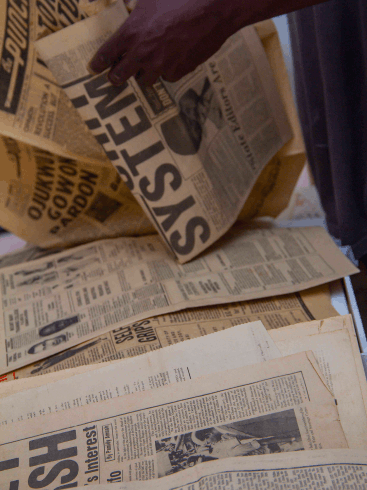
From an interview made in Accra, Ghana, November 2025 So a friend of mine urged me to buy this case of newspapers from a man who used to sell newspapers. We sold newspapers ourselves at the time, and it was the only case he had, so I took it. I did it because I was looking for inspiration to find a topic to work on. But the interesting thing is that most of the articles were from the 1960s and 1970s, and I was looking for either a connection or a break between this society and ours today. And I found both similarities and differences. I think I was mostly attracted to the ads page, the car page, the car ads. But these were actually drawn in black and white, mostly as ink drawings. It wasn't digital. And it was some of these things that inspired the figures of men in shoes and on cars. And then, in the editorial section of most newspapers, there were also men and women who were very, very well dressed in suits.
Archives & mémoire