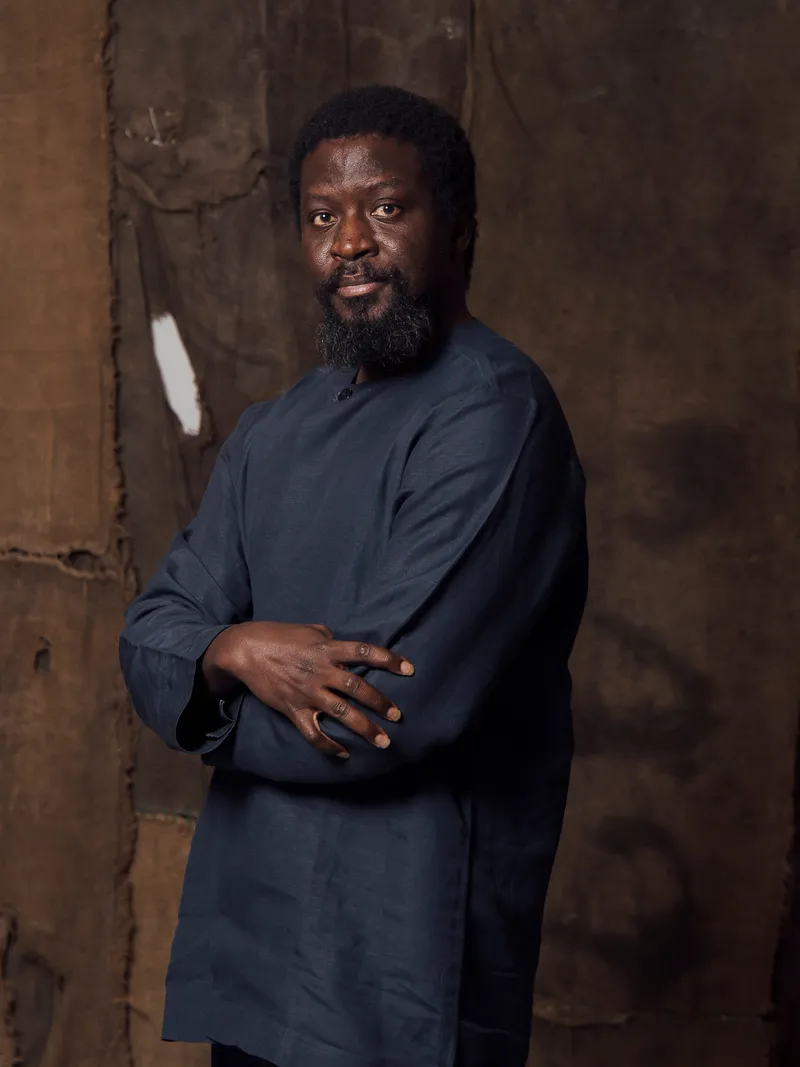
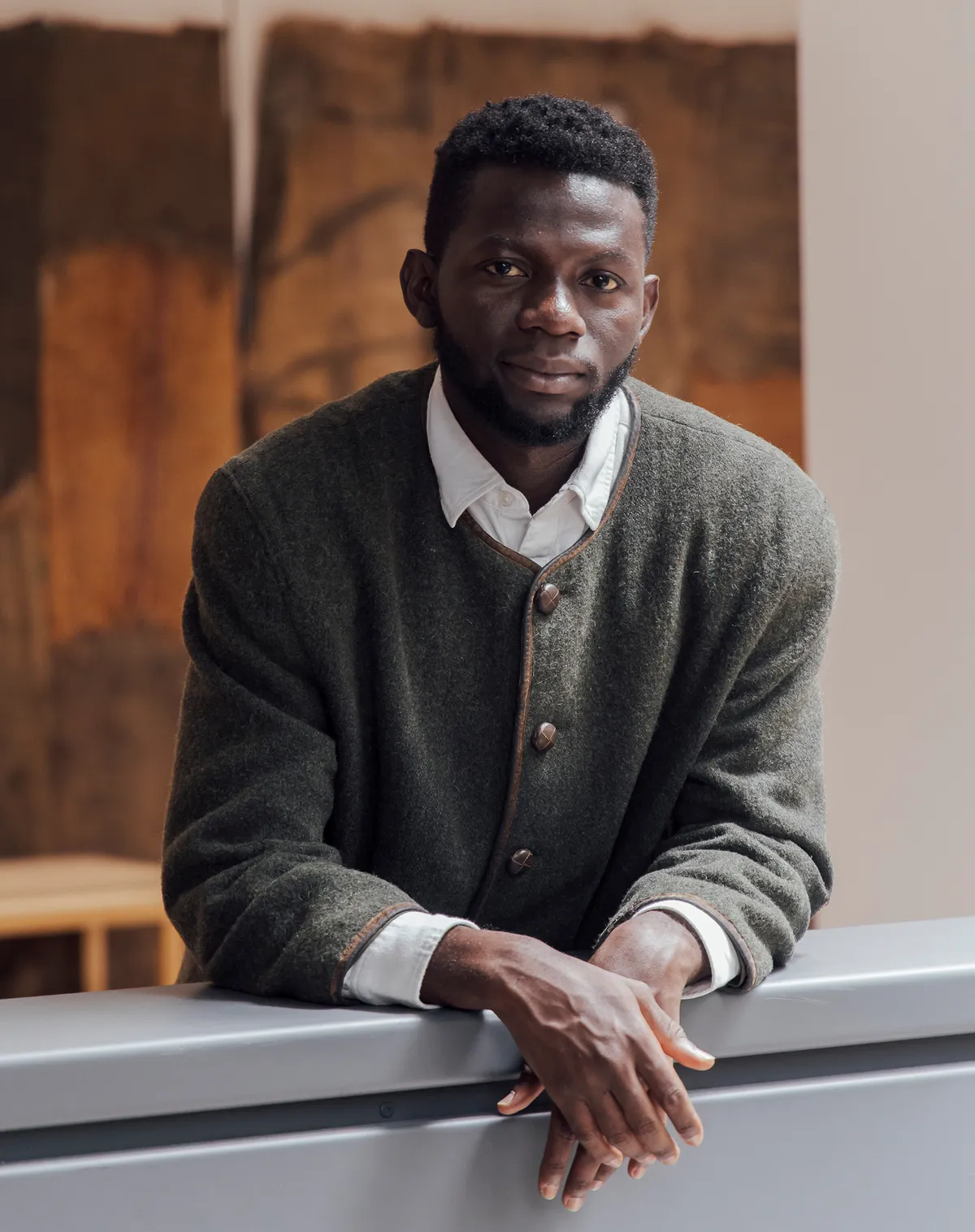
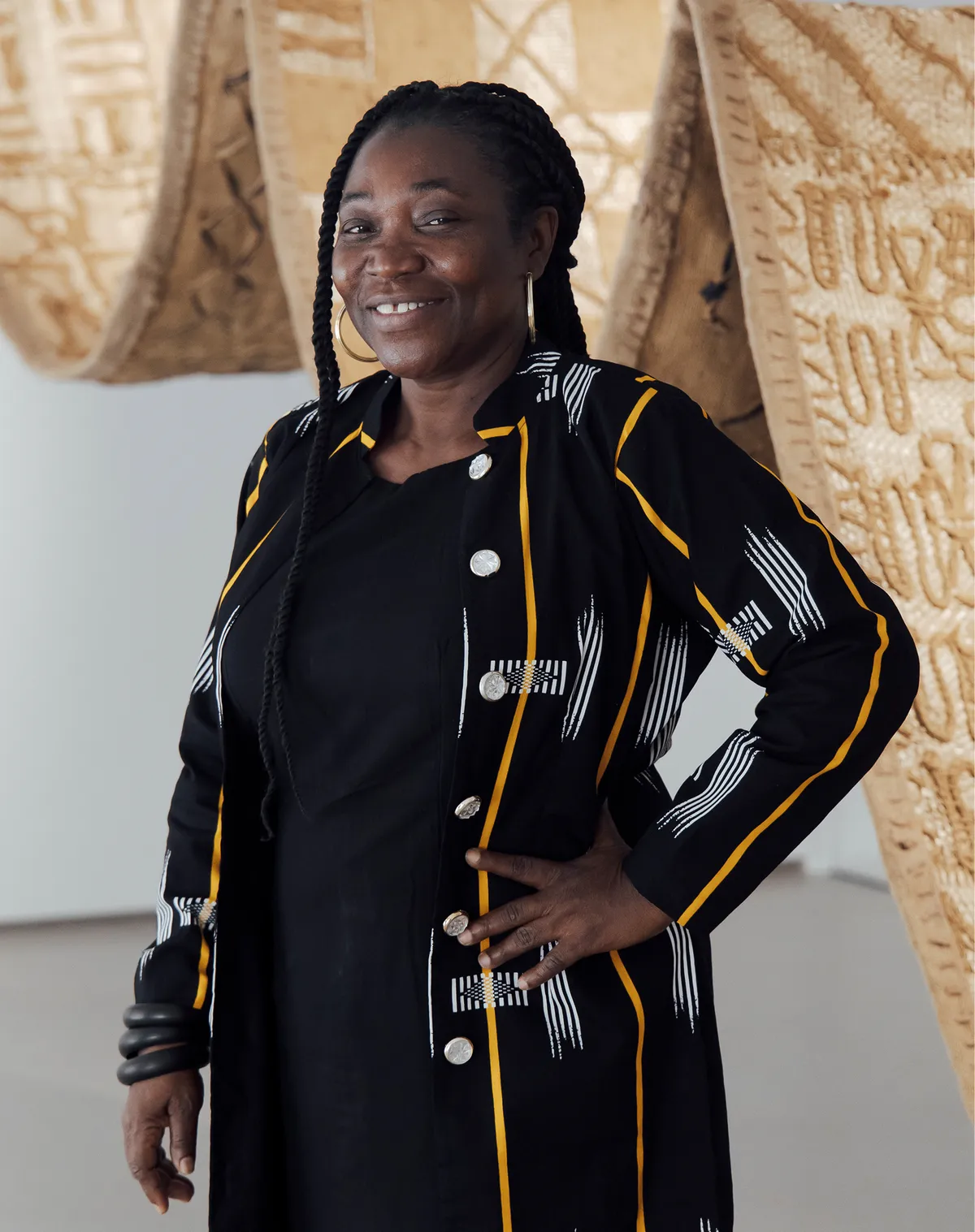
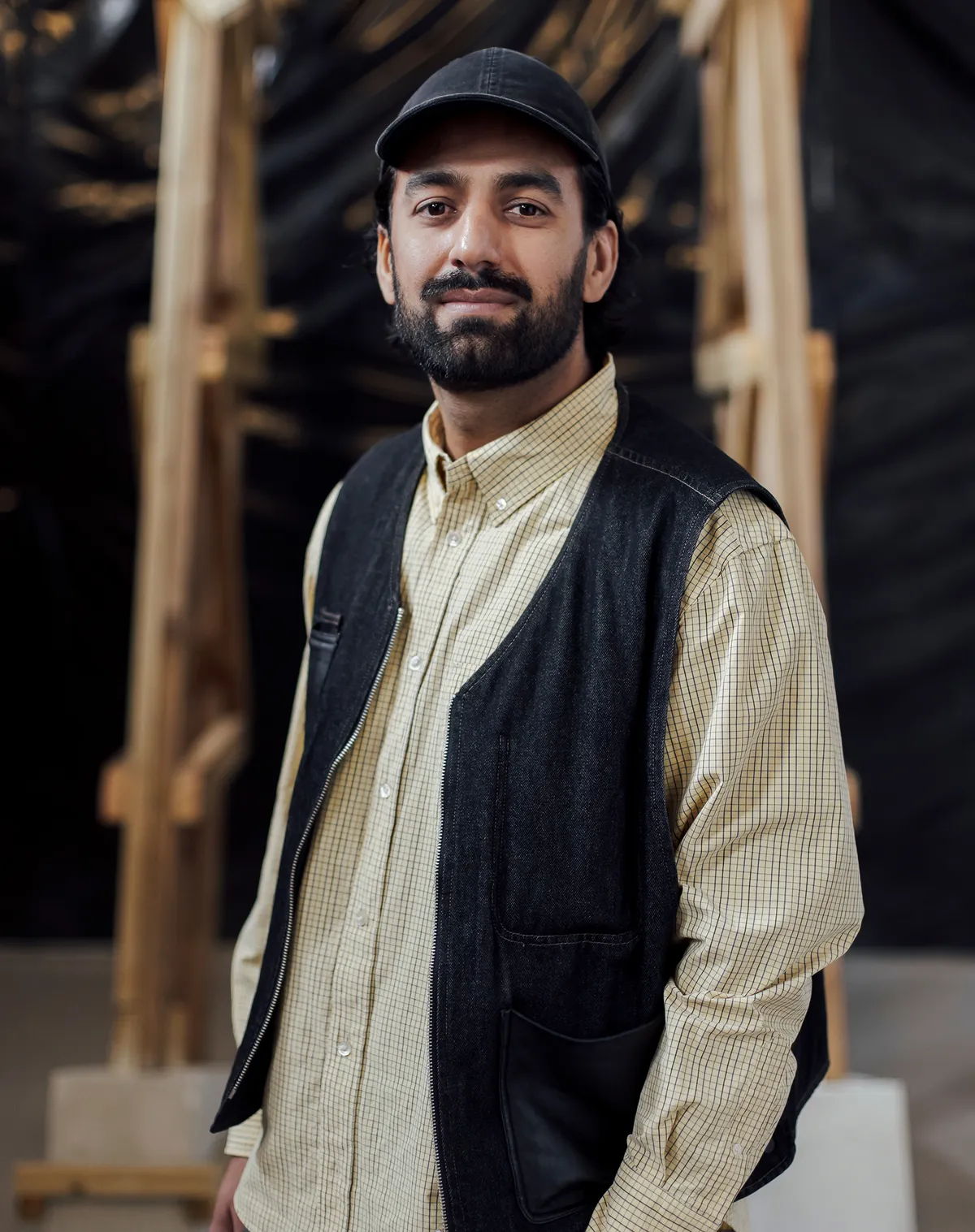
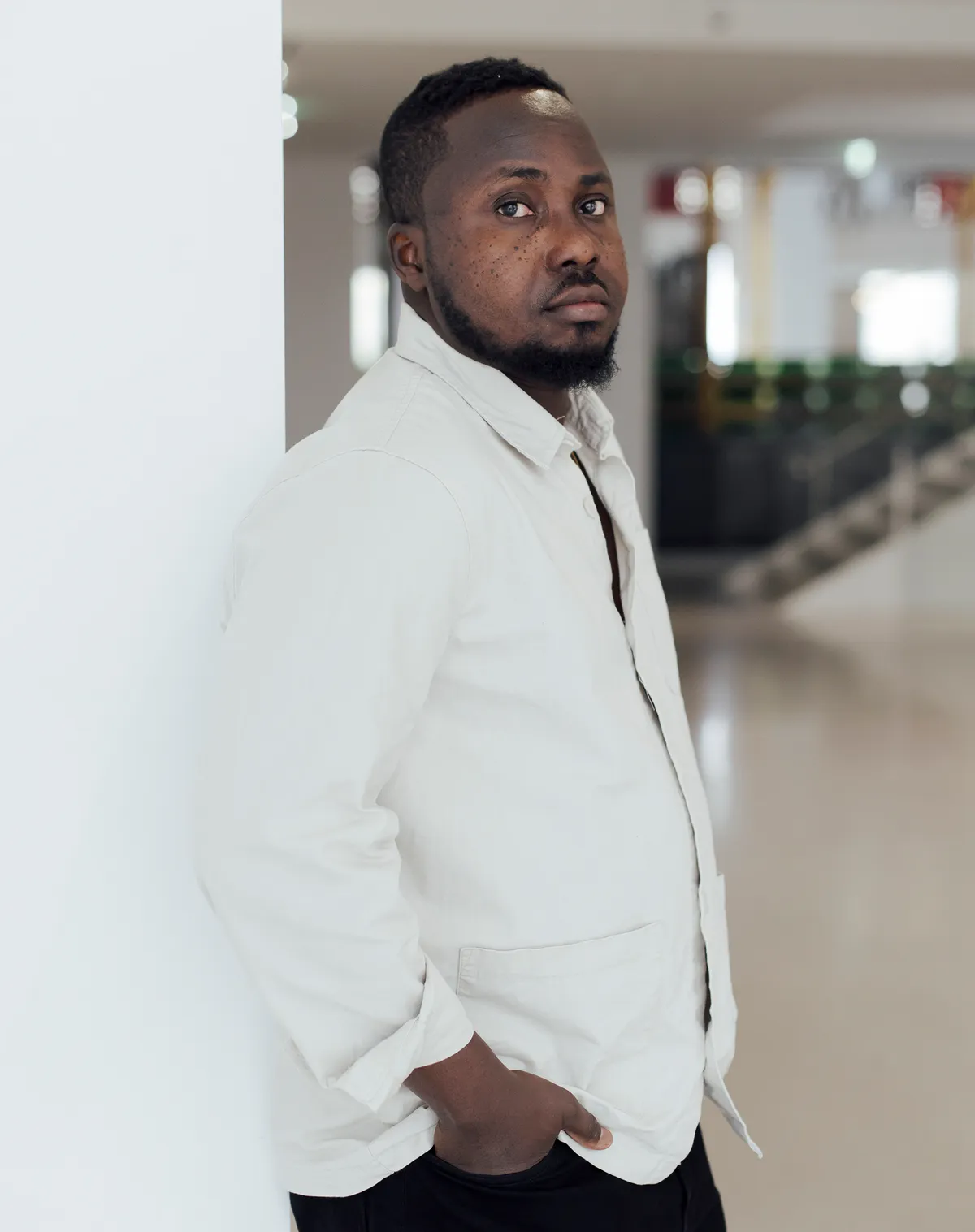
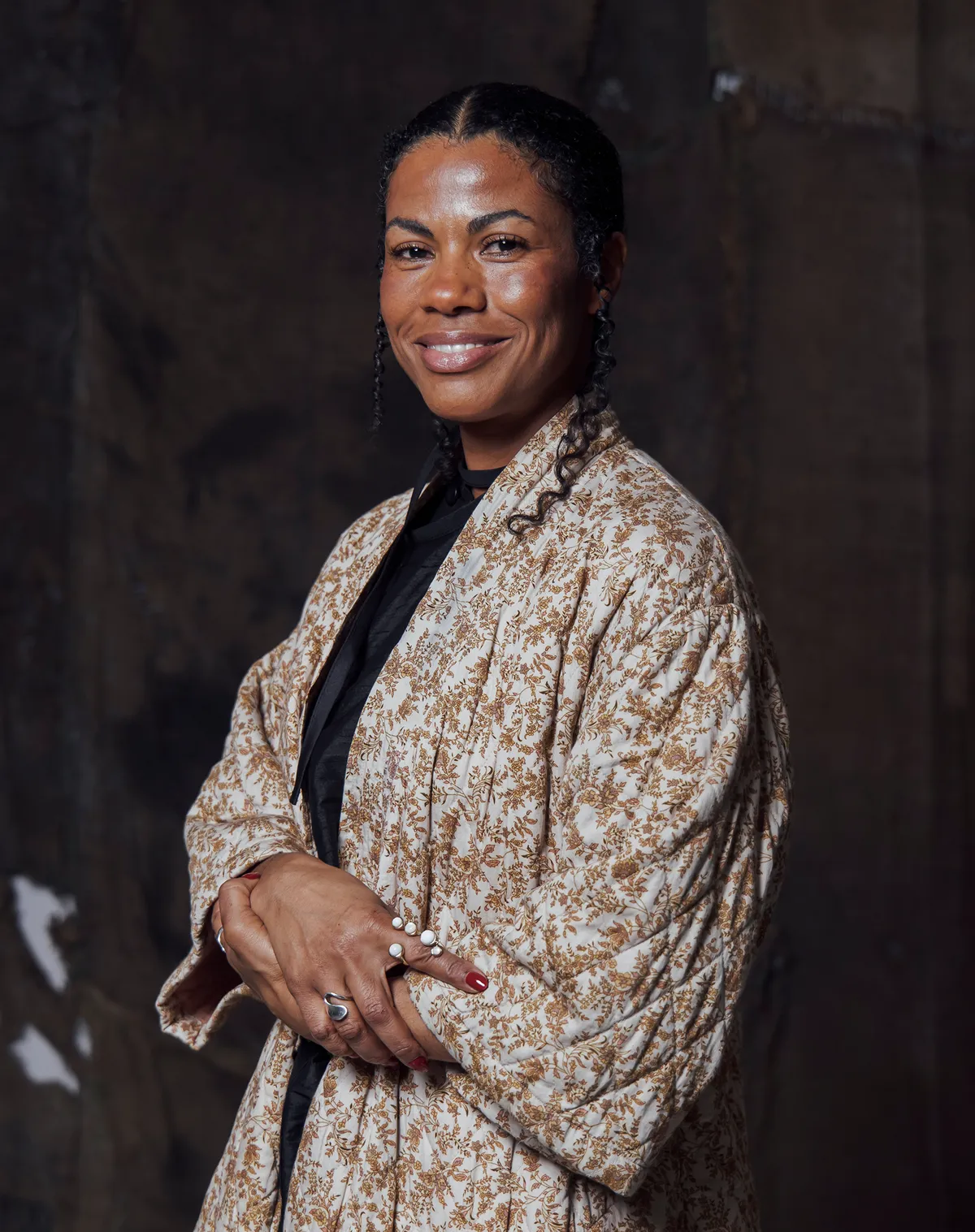
Ibrahim Mahama lives and works in his hometown. After graduating from Kwame Nkrumah University of Science and Technology (KNUST) in 2013, he was selected two years later for the 56th Venice Biennale, curated by Okwui Enwezor. On that occasion, he covered part of the Arsenale with embroidered burlap bags in his work Out of Bounds (2015). In 2017, he also took part in Documenta 14 in Athens and Kassel, curated by Adam Szymczyk.
Today, Ibrahim Mahama is developing new ways of thinking about cultural institutions, with a commitment to making art more accessible and inclusive. Inspired by the idea that art should be shared rather than treated as a commodity, he has created several cultural spaces in Tamale intended primarily for young people and local audiences.
Since 2019, he has founded the Savannah Centre for Contemporary Art, Red Clay and Nkrumah Voli-ni. These venues host workshops, exhibitions, artist residencies, film screenings and educational activities. They also house a significant archive dedicated to Ghana’s contemporary history, from the colonial period through to the country’s independence in 1957.
"Ideas are everywhere, we just have to open the doors and let them in.
Ibrahim Mahama
Since the 2010s, Ibrahim Mahama has been developing a body of work that explores Ghana’s colonial and postcolonial history. Through narratives relating to industry, know-how, the circulation of goods, and the preservation of heritage, his work highlights the transformations and legacies that shape contemporary societies.
The Harvest Season
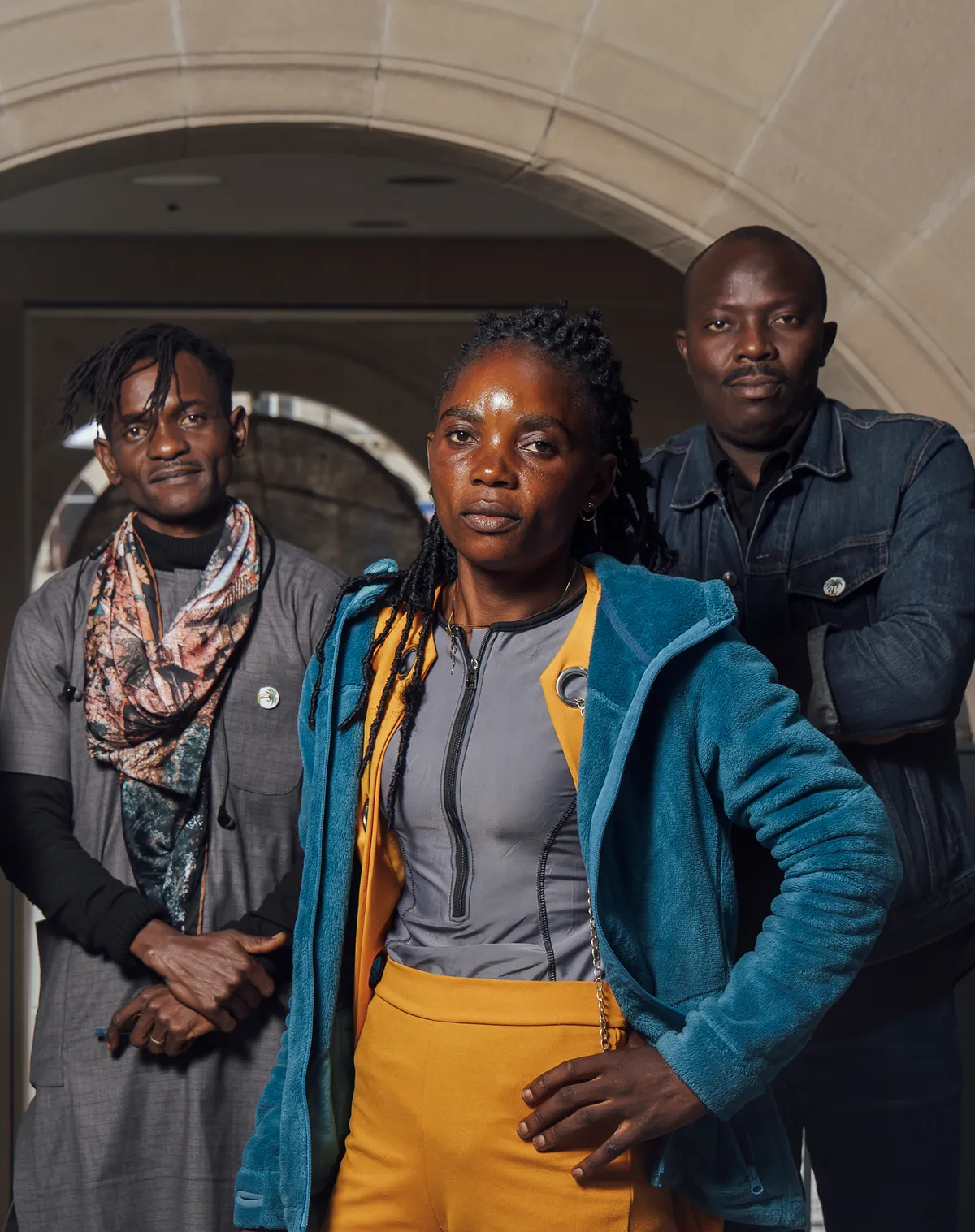
An exhibition conceived by Ibrahim Mahama with nine associated artists, echoes the art centres he has been developing in Tamale, in northern Ghana, since 2019. Conceived as spaces for creation, sharing, and transmission, these venues are built with local communities and contribute to the development of independent cultural institutions in Africa.
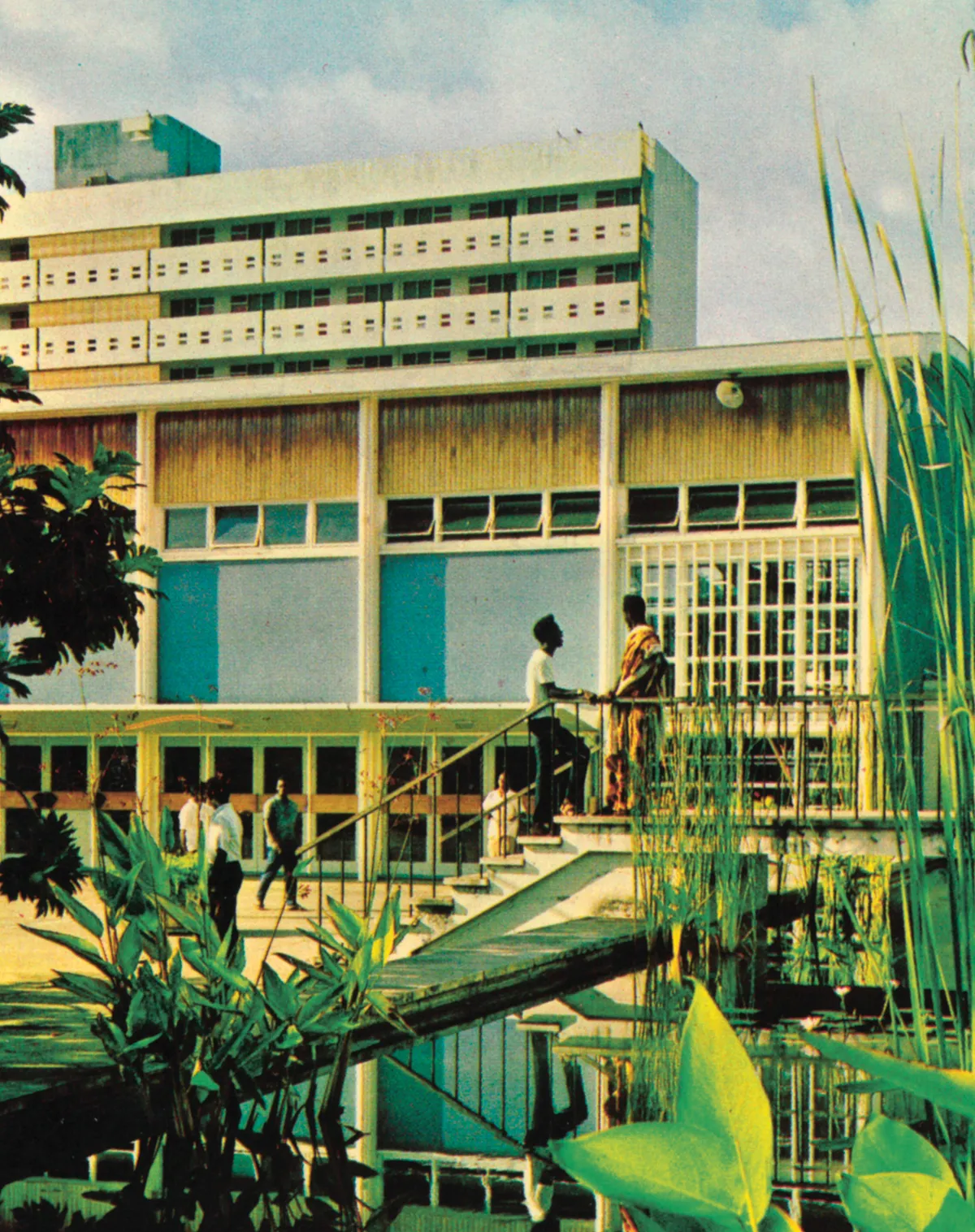
Building on Ibrahim Mahama’s work, the exhibition explores the political, cultural, and social ideas and hopes that emerged at the time of African countries' independence in the 1950s and 1960s, to reflect on possible futures.
The Harvest Season evokes the patient cycle of creation: sowing ideas, transmitting knowledge, and reaping the fruits of a collective commitment.
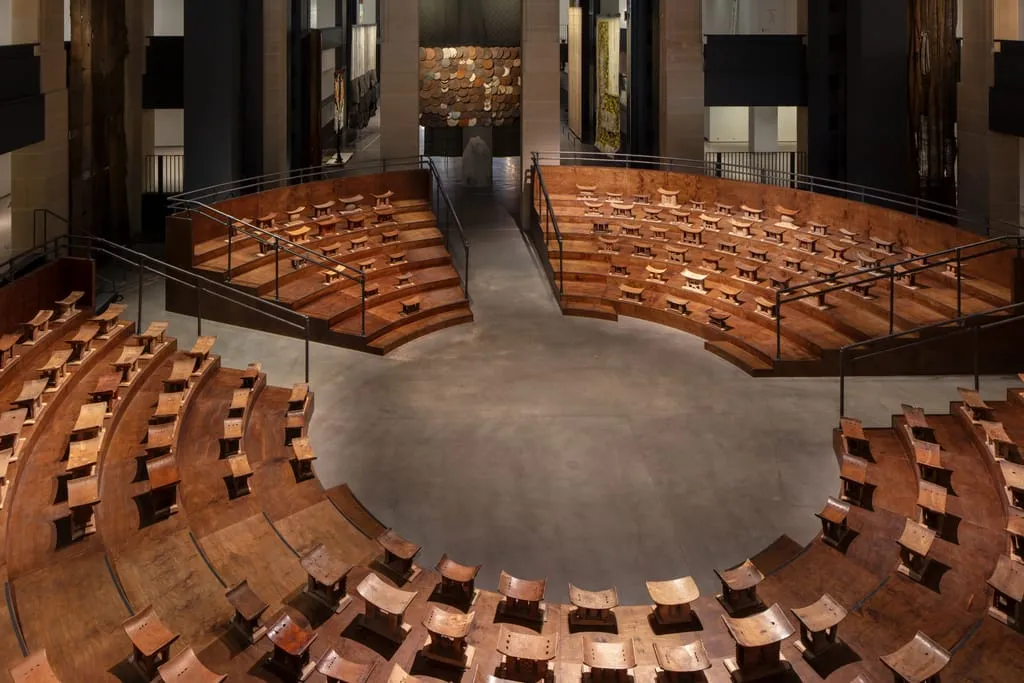
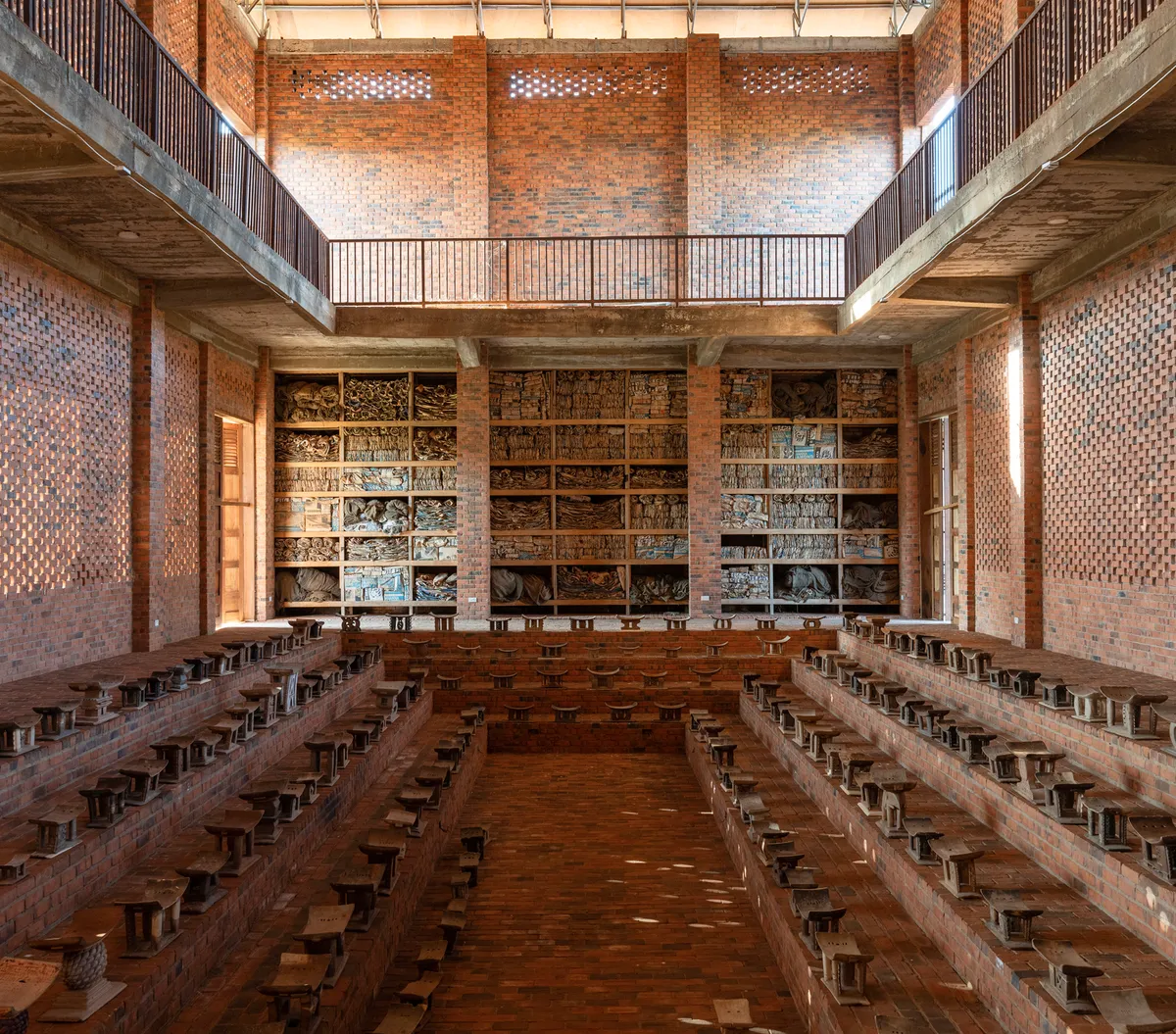
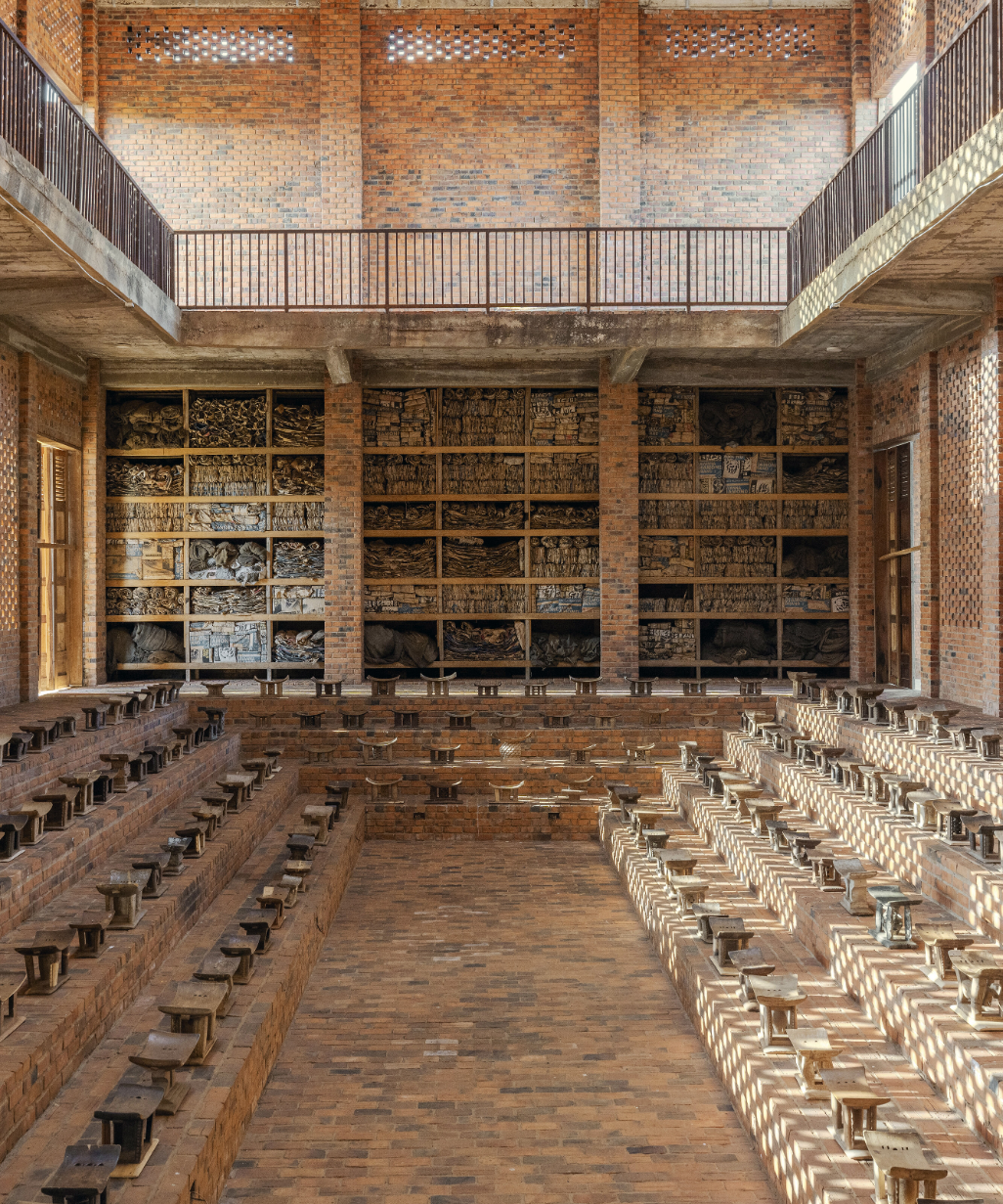
Ibrahim Mahama’s installation Parliament of Ghosts reflects the ideas at the heart of the art centres he is developing in Tamale: a collective, living practice built from old materials. Deprived of its representatives, this 'ghost' parliament becomes both the symbol of an unfinished democracy and a space open to new possibilities.
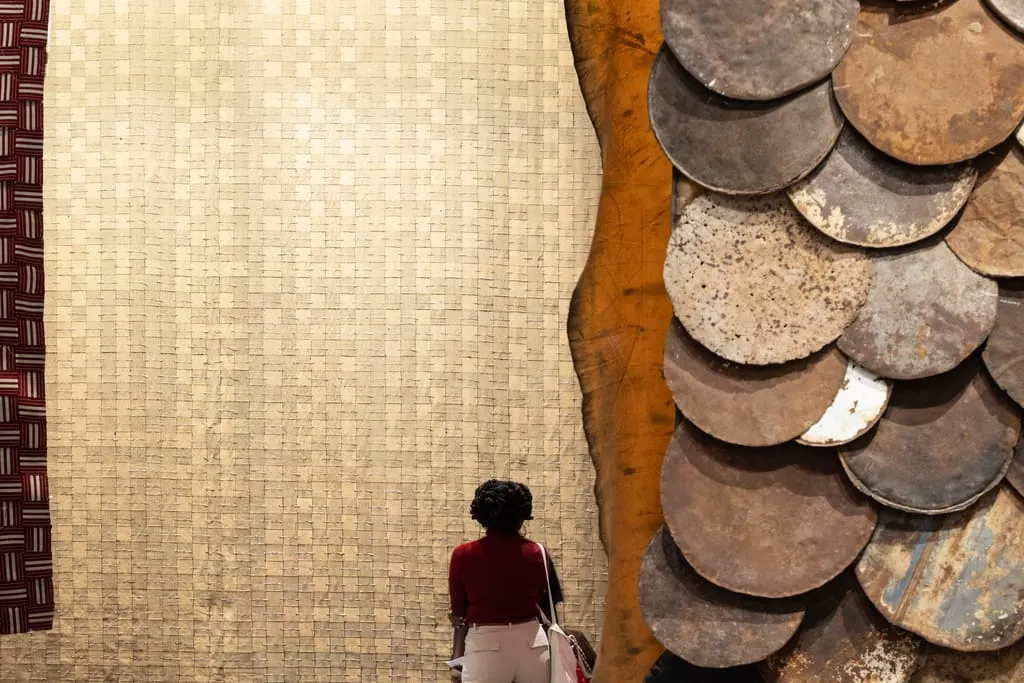
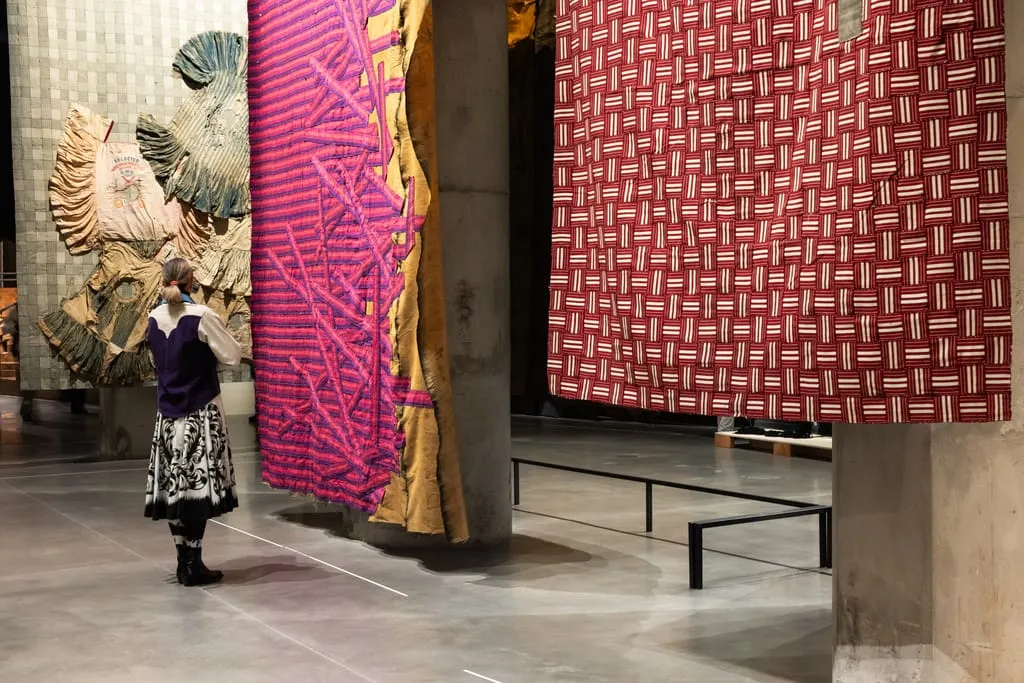
For this exhibition, Ibrahim Mahama has created large-scale textile compositions using Ghanaian fabrics produced in the north of the country and recycled industrial materials: lorry inner tubes, burlap bags, and textiles sourced or traded at markets. Assembled and sewn together, these materials – marked by time, use and exchange – become true contemporary tapestries, bearing the stories of their past.
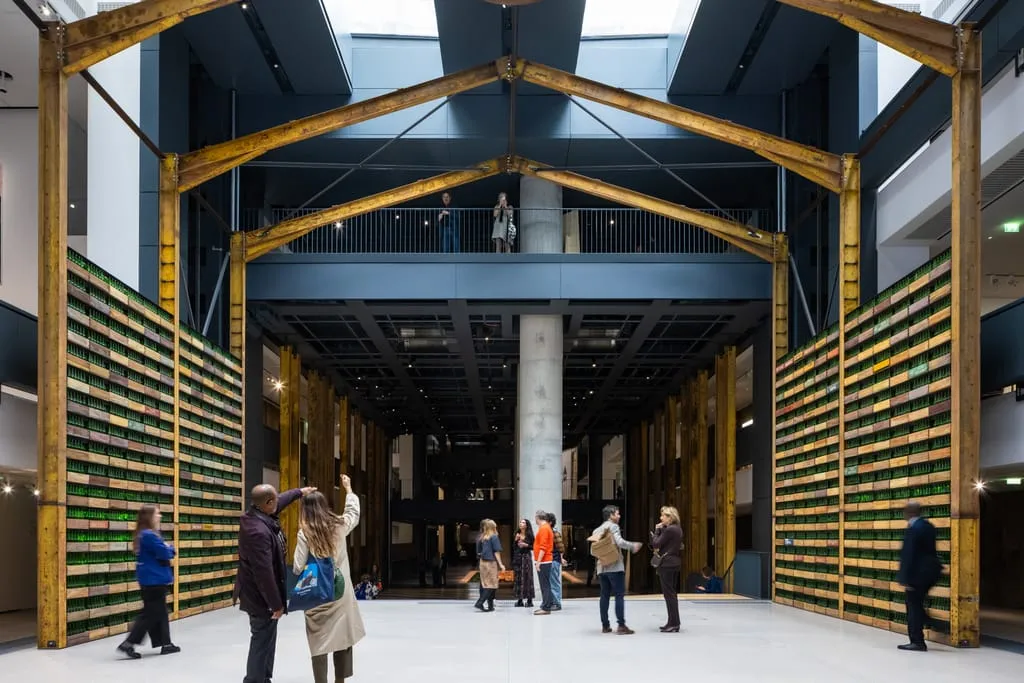
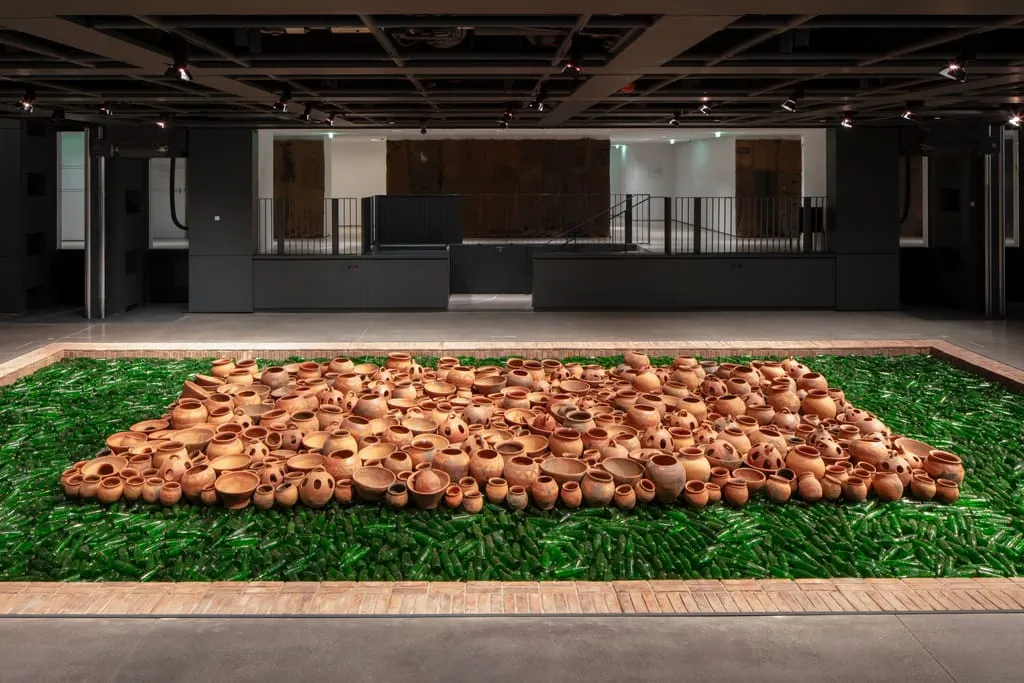
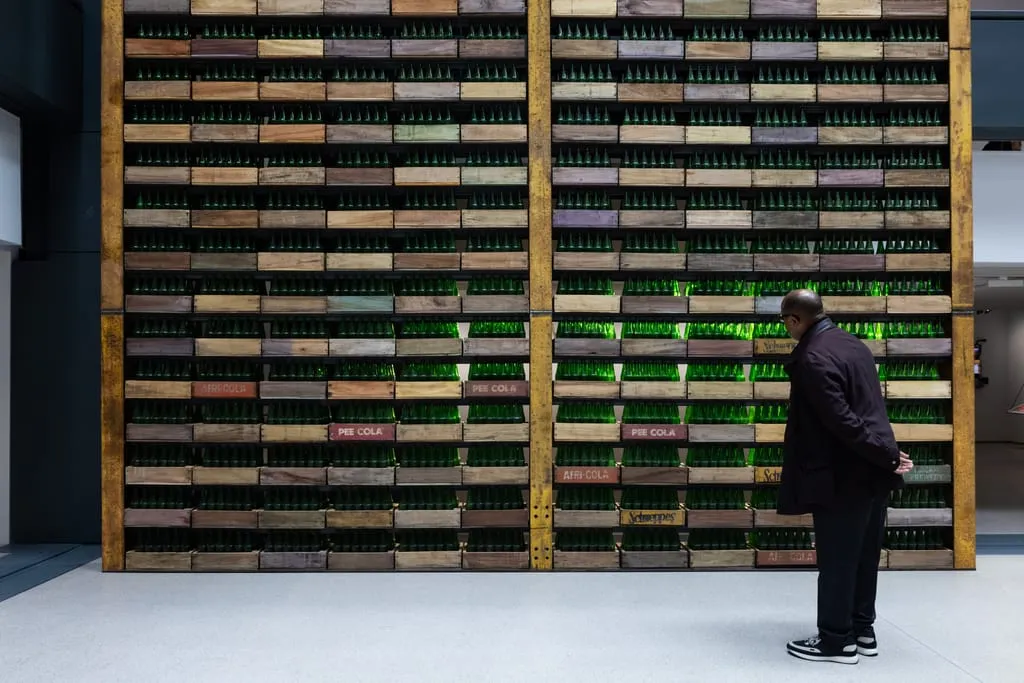
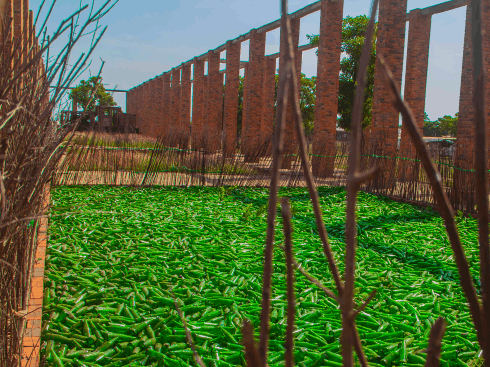
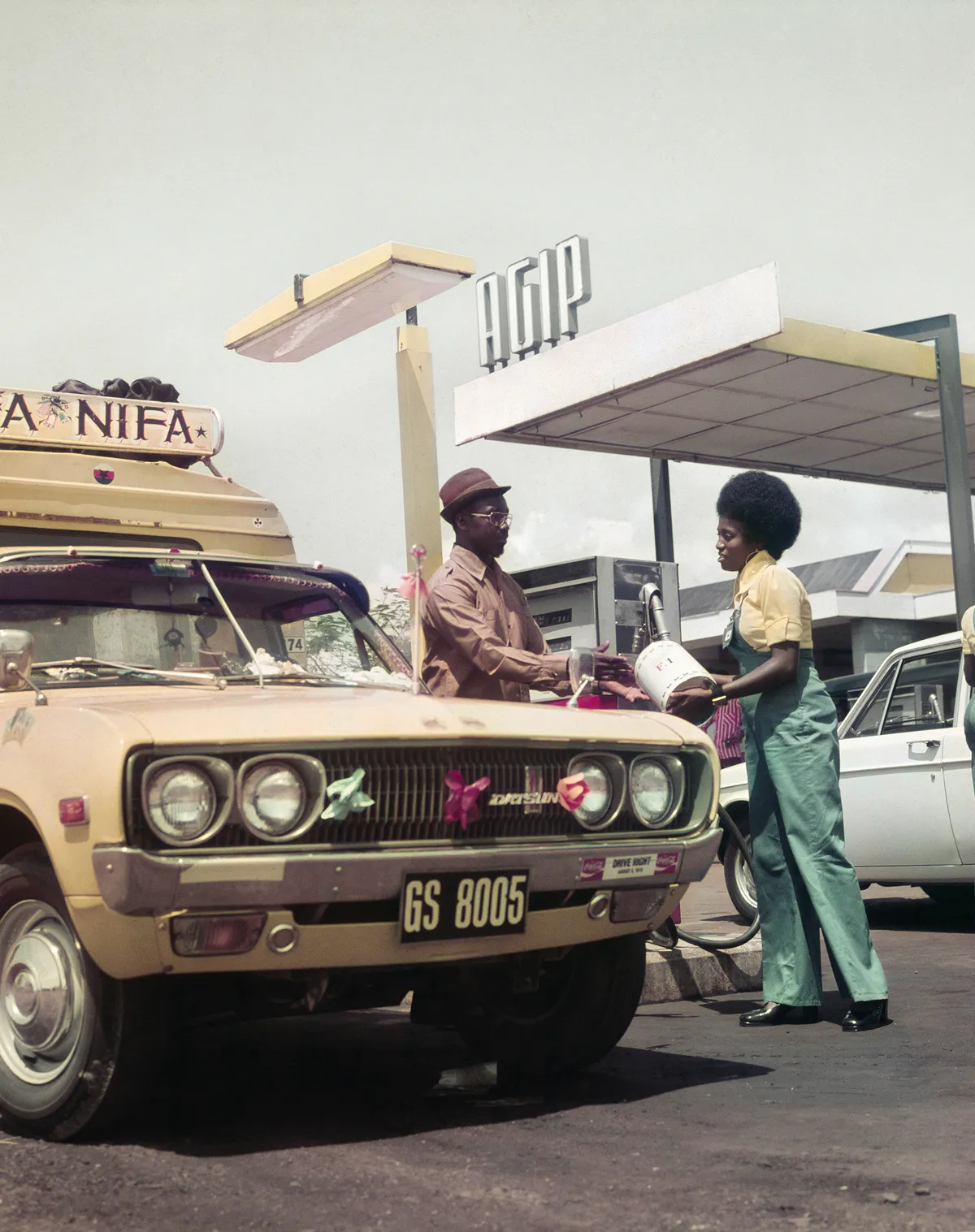
The monumental installation, Aboso Glass Factory, draws inspiration from the reconstruction of a former glass factory built in Aboso, in eastern Ghana, at the end of Kwame Nkrumah’s regime. Opened in 1966, the factory produced bottles for major international corporations before being abandoned.
By purchasing the site and relocating it to Red Clay in Tamale, Ibrahim Mahama has given it a new lease of life, both as a work of art and as a space for learning. The moulds, bottles and fragments of glass salvaged from the site have become the building blocks of an original artistic language, offering new perspectives and possibilities for the future.
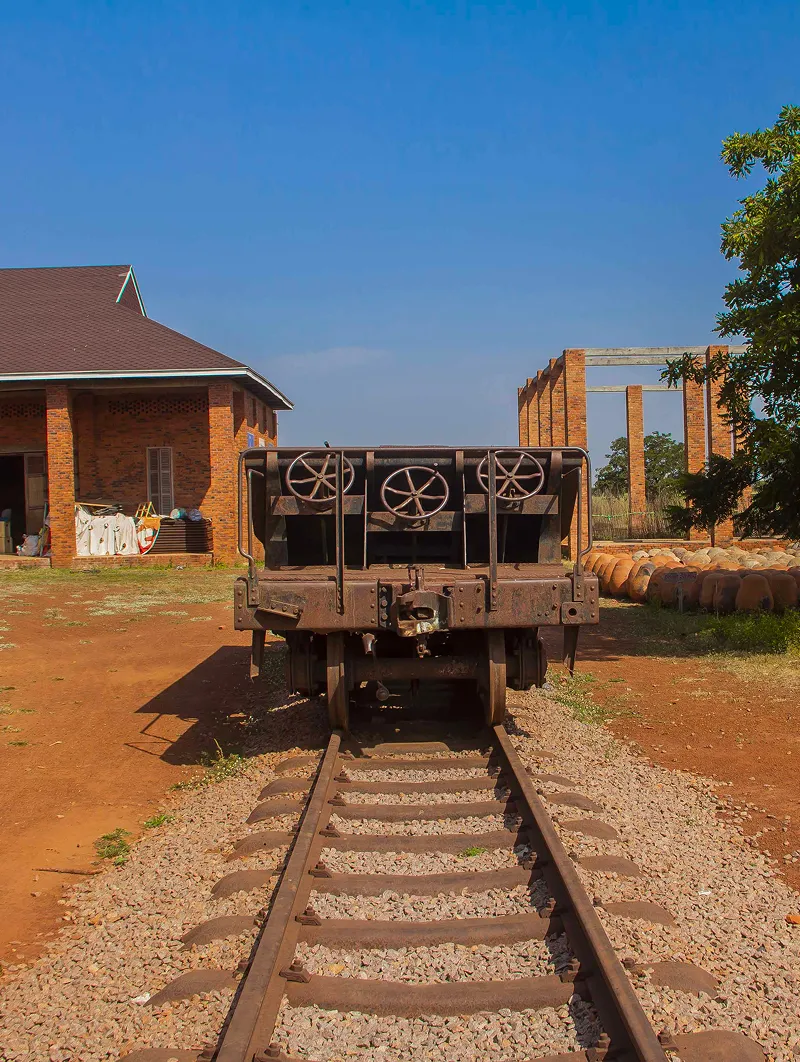
Since 2013, Ibrahim Mahama has been conducting extensive research into Ghana’s railway network. In the 1890s, the British colonial authorities built railway lines in the southern part of the Gold Coast – now Ghana – to facilitate trade within the territory and with the other colonies of the British Empire.
Some of the machinery and locomotives used in Ghana's railway system at that time came from European countries. Through this project, Ibrahim Mahama is compiling archival material to document this history and is also preserving physical artefacts–such as carriages and rails–which he has been transporting to Tamale since 2023.
See also
Art centers
His contributions to the Great Harvest
Raw description. This installation, which takes the form of a parliamentary chamber, is made from traditional wooden Ashanti seats on which visitors are invited to sit. The work embodies the collective and living practice of Ibrahim Mahama.
Archives & mémoire
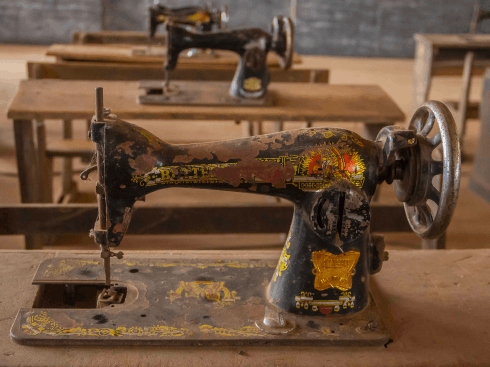
Sewing machine
Extractivisme & mondes industriels
We can also be interested in this notion of accumulation through my works Parliament of Ghosts or Glass Factory, which consists in particular of a multitude of glass bottles produced from the same mold. I like to associate the latter with El Anatsui's sculptures, which are also made up of assembled objects — with the difference that he uses capsules, not the bottle.